Is It Worth Buying a Boat?
Is it worth buying a boat? A boat is a poor investment from a financial standpoint. New pleasure boats are unlikely to appreciate in value, and you can expect about 10% of the purchase price annually in maintenance expenses. This doesn’t account for docking fees, insurance, and the immediate depreciation once you put the boat in the water. Fuel costs add up too.
I understand the appeal of boat ownership. The freedom, the activities, the memories with family and friends are valuable. In this piece, I’ll help you understand what to know before buying a boat, the pros and cons of owning a boat, and when it makes sense to purchase versus other options.
The True Cost of Boat Ownership
The sticker price represents just the beginning of your financial commitment. You need to understand these ongoing expenses to answer whether a boat is a good investment for your situation.
Original purchase price and depreciation
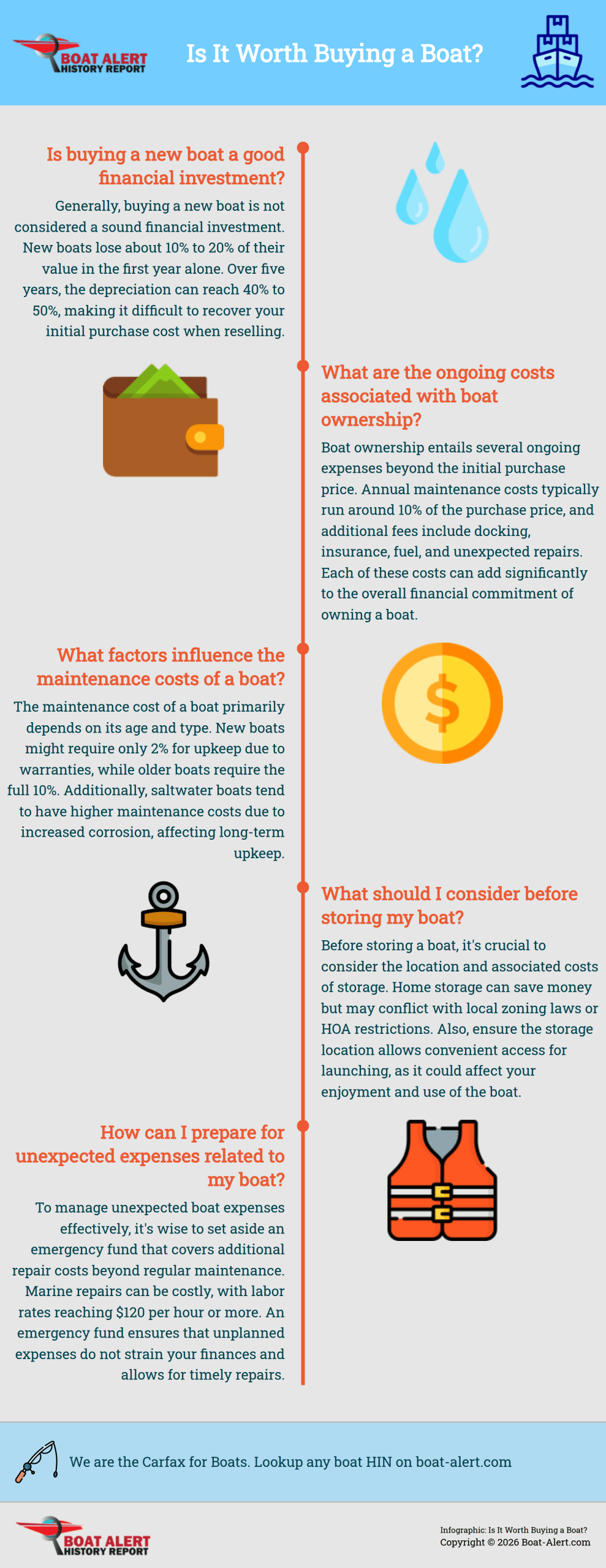
New boats lose between 10% to 20% of their value in the first year alone. This “new boat penalty” accelerates fast. Total depreciation reaches 40% to 50% of the original purchase price over the first five years. A $50,000 boat becomes worth around $25,000 to $30,000 after five years of ownership.
The depreciation curve does flatten over time. Value loss slows by a lot after about 10 years. Some vessels from respected builders can stabilize at 20+ years old and depreciate only 2% to 3% each year if you keep them in good shape. Buying a used boat that’s three to five years old lets you avoid the steepest depreciation hit while still getting a vessel you can rely on. Private-party purchases also entail additional paperwork requirements that many first-time buyers underestimate, especially since boat titling and transfer rules vary significantly across states. Some buyers use resources like ConsumerShield to better understand what should be included in a boat bill of sale before completing a transaction.
First-Time Buyer Mistakes That Cost Thousands
Most regrets in boat ownership trace back to a handful of predictable errors. Knowing them in advance puts you ahead of the majority of first-time buyers.
Skipping a marine survey. A professional marine survey costs $15 to $25 per foot of boat length — roughly $450 to $750 for a 30-footer. Buyers who skip it to save money routinely discover hidden osmotic blisters, rotten stringers, or compromised electrical systems after the sale. The survey almost always pays for itself.
Buying too much boat too soon. Larger vessels feel exciting on a test ride but punish you with proportionally higher maintenance, fuel, and docking costs. Most experienced boaters recommend starting modestly and sizing up after a season or two.
Ignoring the engine hours. Marine engines are rated in hours, not miles. A gas inboard with 1,500+ hours is entering expensive territory. A well-maintained diesel can run 5,000+ hours, but high-hour gas engines need close scrutiny from a mechanic before you buy.
Buying for summer, not the calendar year. People buy boats in a rush of warm-weather enthusiasm and overlook the nine months of storage, winterization, and off-season upkeep. The cost of ownership doesn’t pause when you’re not on the water.
Underestimating the learning curve. Docking, reading weather, understanding right-of-way rules, and basic mechanical troubleshooting all take time to develop. Factor in a boating safety course ($100 to $300) and practice time before your first solo trip with passengers.
Annual maintenance expenses (the 10% rule)
Budget 10% of your boat’s purchase price each year for maintenance. A $50,000 boat requires around $5,000 each year for upkeep. This covers routine engine servicing, oil changes, hull cleaning, waxing and general repairs.
Used boats demand the full 10%, while new boats might just need 2% thanks to warranties. Saltwater boats require more maintenance than freshwater vessels due to corrosion. Deferred maintenance accelerates depreciation and creates costlier problems down the line.
Docking, mooring, and storage fees
Storage costs vary by type and location. Outdoor uncovered storage runs $50 to $200 each month. Covered storage costs $150 to $350 per month. Dry stack storage ranges from $200 to $500 each month. Marina slips charge $10 to $20 per foot per month. A 30-foot boat pays $300 to $600 each month just for water access.
Annual dock slip memberships range between $2,500 and $6,500.
Insurance and registration costs
Boat insurance averages $300 to $500 each year, though this represents around 1% to 2% of the boat’s value. Coastal states like Florida see higher premiums ($657 per year) compared to inland states ($301 per year). Registration fees vary by state and run between $25 and $250 at first, then around $50 for annual renewals.
Fuel and unexpected repairs
A 250-horsepower boat burns around 25 gallons per hour at cruising speed. Marine fuel costs $5 per gallon, so that’s $125 per hour on the water. Four-hour outings cost $500 in fuel alone.
Unexpected repairs add another layer of expense. Hull damage repairs range from a few hundred dollars to $20,000 or more. Electrical system failures run $300 to $10,000+ depending on complexity. Set aside an additional 10% to 20% of your boat’s value for these unplanned costs.
Critical Questions to Ask Before Buying a Boat
Before signing any purchase agreement, ask yourself these questions to know before buying a boat. These points separate successful boat owners from those who regret their purchase within the first year.
Can you afford a worst-case scenario?
Emergency repairs happen without warning. Marine parts and specialized labor create bills that shock unprepared owners. Labor rates for marine technicians range from $70 to $120 per hour. Factory-certified diesel mechanics charge over $175 per hour. Specialized repairs that need haul-outs add thousands more.
Set aside an emergency fund beyond your maintenance budget. You’re not ready for boat ownership if a $5,000 engine repair or $3,000 electronics failure would strain your finances.
Where will you use and store the boat?
Storage location affects both cost and convenience. Home storage saves money but may violate local zoning ordinances or HOA rules. Many residential areas restrict boat size, placement and how long you can store it on private property.
Marina access matters if you plan frequent outings. Ownership loses its purpose when you drive hours to launch. Research local regulations before assuming you can park a boat in your driveway.
Before You Commit: Check the Boat’s History
A used boat might look flawless on a sunny dock, but its past tells a different story. Unlike car purchases, many buyers skip background checks on boats — a costly oversight.
A HIN (Hull Identification Number) search reveals whether a vessel has been reported stolen, involved in a major accident, or carries an outstanding lien. Buying a boat with an undisclosed lien means the lender can repossess it even after you’ve paid in full. Theft records matter too — owning stolen property creates legal exposure for the buyer, not just the seller.
Run a history report before depositing any money. Services like Boat-Alert.com aggregate records from Coast Guard databases, state titling agencies, and insurance total-loss reports into a single search. At roughly $20 to $40, a history report costs far less than discovering a $15,000 lien after closing. Think of it the same way you’d treat a Carfax report on a used car — a non-negotiable step in due diligence.
What to look for in a report:
- Lien status — confirm the seller can legally transfer a clean title
- Theft flag — cross-reference with national stolen boat databases
- Accident or total-loss history — reveals prior structural damage even if cosmetically repaired
- Title chain — multiple quick transfers can signal a troubled vessel
Do you have access to reliable mechanics?
Finding marine technicians proves difficult. Specialized boat engines differ from car engines in a big way and need mechanics with specific training. Ask other boat owners at your local marina to get recommendations, especially those with your boat type.
Check if prospective mechanics hold master technician certifications. These require passing tough exams. Summer brings longer wait times because more people just need service. Winter rates may be lower when shops aren’t busy.
Will this boat fit your needs in 3-5 years?
Buying a boat represents a multi-year commitment. Think about how your usage patterns might evolve. Will your family grow? Might you want to explore different activities? A boat that’s too small frustrates growing families. Oversized vessels drain budgets without reason.
Future-proofing your purchase prevents expensive upgrades or premature resale.
When Buying a Boat Makes Sense
Despite the financial realities, boat ownership delivers real value if your circumstances arrange properly. Approximately 11.9% of US households own or co-own a recreational boat. These owners share common characteristics that make ownership worthwhile.
You’re passionate about being on the water
A boat opens opportunities for adventure, relaxation, and creating lifelong memories. The boating lifestyle connects you to a community of like-minded individuals who share your passion. You get a peaceful retreat where you can recharge and enjoy solitude or the company of friends without distractions. It allows you to interact with nature and observe wildlife up close while accessing areas unreachable by land. This passion sustains you through the inevitable maintenance tasks and expenses.
You have realistic budget expectations
Successful owners understand the 10% maintenance rule and build emergency funds accordingly. They don’t expect boats to appreciate in value or generate income.
The median age of boat owners is 54 years, though the average age of first-time buyers has dropped to about 46. Millennials now make up 31% of boater demographics.
You’re prepared for maintenance responsibilities
Boat ownership just needs time beyond using the vessel. You’ll clean, inspect, and address problems promptly. DIY maintenance saves thousands annually compared to professional services. Owners who adopt this responsibility prevent small issues from becoming expensive failures.
You plan to use it regularly
The average US boater uses their boat 40 hours annually, but dedicated owners take theirs out multiple times weekly. Regular use justifies the expense and keeps systems functioning properly. Boats sitting unused deteriorate faster and bring less satisfaction per dollar spent.
Alternatives to Boat Ownership
Several options let you enjoy boating without the financial burden of ownership.
Renting boats for occasional use
Renting suits infrequent boaters well. Pontoons and deck boats cost $75 to $150 per hour, with half-day rentals around $400 to $600 and full days between $700 and $1,000. You pay only for time spent on the water and avoid maintenance and storage costs. Local marinas, online platforms like Boatsetter, and tourism shops offer rentals. Captained charters provide an all-inclusive experience for those wanting hands-off enjoyment.
Boat sharing and fractional ownership
Fractional ownership grants legal equity in a vessel. A 1/8 share in a $4 million yacht costs around $500,000, with annual running costs between $40,000 and $60,000. Management companies handle maintenance, crew, and scheduling. You receive three to six weeks of usage each year based on your share percentage. Full ownership provides complete control, but fractional models reduce costs significantly while professional management handles logistics.
Joining a boat club
Boat clubs charge initiation fees plus monthly dues ranging from $150 to $375. Freedom Boat Club offers access to 400+ locations around the world with maintenance-free, fueled boats ready at reservation time. Clubs eliminate storage, insurance, and repair responsibilities.
Chartering in different locations
Chartering opens access to destinations like the Mediterranean and Caribbean without owning equipment. Choose bareboat options if you’re qualified or hire professional crew for managed experiences.
New vs. Used Boats: A Financial Comparison
The new-vs-used debate comes down to where you want to absorb risk: financial depreciation or mechanical uncertainty.
The case for buying new: A new boat carries a manufacturer warranty (typically two to five years on the hull, one to two years on the engine) that shields you from early repair costs. You know the full history because you are the history. Modern electronics, fuel efficiency improvements, and updated safety features come standard. The trade-off is absorbing that brutal first-year depreciation of 10% to 20% the moment you leave the dealer.
The case for buying used: A boat that is three to five years old has already absorbed the steepest depreciation and typically still has usable life ahead. You pay closer to market value rather than the new-boat premium. The risk is buying someone else’s deferred maintenance or undisclosed damage — which is exactly why a survey and history report matter so much on used purchases.
The sweet spot: Most experienced boaters point to boats in the five to ten year range from reputable builders as the best value. Depreciation has leveled off, but the vessels aren’t old enough to face full engine rebuilds or major structural work yet. Fiberglass hulls from quality manufacturers last 30 to 50 years with proper care, so age alone isn’t the disqualifier that it is with cars.
| New Boat | Used Boat (3–5 yrs) | |
|---|---|---|
| Depreciation risk | High (yr 1–3) | Already absorbed |
| Maintenance cost | Low (warranty) | Standard 10% rule |
| History transparency | Full | Requires verification |
| Price | Full retail | 30–50% less |
| Financing options | Dealer incentives available | Independent lender |
Can You Get a Tax Break on a Boat?
In certain circumstances, yes — though the rules are narrow and the IRS applies them carefully.
Second home deduction. If your boat has a sleeping berth, a toilet, and cooking facilities, it may qualify as a second home under US tax law. This means the interest on a boat loan could be deductible the same way mortgage interest is, subject to standard limitations. Consult a tax advisor to confirm your specific vessel qualifies and that you itemize deductions rather than taking the standard deduction.
Business use. If you legitimately use a boat for business purposes — client entertainment, fishing charters, diving instruction — you may be able to deduct a proportional share of expenses including fuel, maintenance, and depreciation. The IRS scrutinizes boat-as-business-expense claims closely. You’ll need meticulous logs documenting business use versus personal use.
Sales tax and state considerations. Where you register and primarily use your boat affects how much sales or use tax you pay. Some states have no sales tax on boat purchases. Others cap the taxable amount. Buyers who purchase in a low-tax state but primarily use the boat elsewhere may still owe use tax in their home state.
What boats don’t qualify for: Boats used purely for personal recreation don’t generate deductible losses or depreciation. They also don’t qualify for the home office deduction. The IRS hobby-loss rules apply if you try to claim a boat as a business without consistent profit intent.
Note: Tax law changes frequently. Consult a licensed CPA or tax attorney before making purchase decisions based on potential deductions.
What Happens When You Want to Sell
Even the happiest boat owners eventually sell. Knowing what the resale process involves helps you make smarter buying decisions from day one.
Timing matters. Boats sell fastest in spring (February through May) when buyers are motivated by the upcoming season. Listing in the fall or winter typically means waiting or accepting a lower offer. If you need a quick sale, price aggressively — boats aren’t liquid assets.
What buyers will scrutinize. Prospective buyers will check the same things you should have checked when you bought: engine hours, maintenance records, cosmetic condition, and electronics functionality. Keeping a maintenance log throughout ownership is one of the highest-return habits you can build. A documented service history commands a meaningful price premium over a comparable boat with no records.
Where to list. Boat Trader, YachtWorld, Facebook Marketplace, and your local marina bulletin board are the most common channels. Each attracts different buyer types — Boat Trader and YachtWorld skew toward serious buyers willing to pay fair market value; Facebook reaches local, price-sensitive shoppers. Most sellers use two or three channels simultaneously.
Expect negotiation. Nearly every boat sale involves back-and-forth on price. Buyers will use survey findings as leverage — which is fair. Price your boat with room to negotiate, but anchor to realistic comps from completed sales, not asking prices.
Don’t forget the paperwork. A proper bill of sale protects both parties and is required in most states to transfer title. Depending on your state, you’ll also need to complete a title transfer, notify your insurer, and possibly cancel your registration. Overlooking these steps creates liability that follows you after the sale.
Conclusion
Boat ownership is seldom a smart financial decision, but the experiences and memories can justify the expense if your circumstances are arranged right. I’ve outlined the actual costs and critical questions to help you decide. Ownership delivers genuine value if you can afford the 10% maintenance rule, plan to use your boat often, and adopt the responsibilities. Rentals or boat clubs make better financial sense for occasional enjoyment otherwise.
Read Related Articles:
- Alaska Boat Registration: All you need to know Now
- Why you need a Bill of Sale for your Boat or Jetski
- Is Your Boat Insurance adequate? – Checkup time!
- West Virginia Boat Registration
- Does Boat Insurance cover Boat Towing?
Categories: To learn more about Boat-Alert.com History Reports for used boats and boat hin check free visit: www.Boat-Alert.com