Boat Accident History Search
How to Search a Boat’s Accident History (Before You Buy)
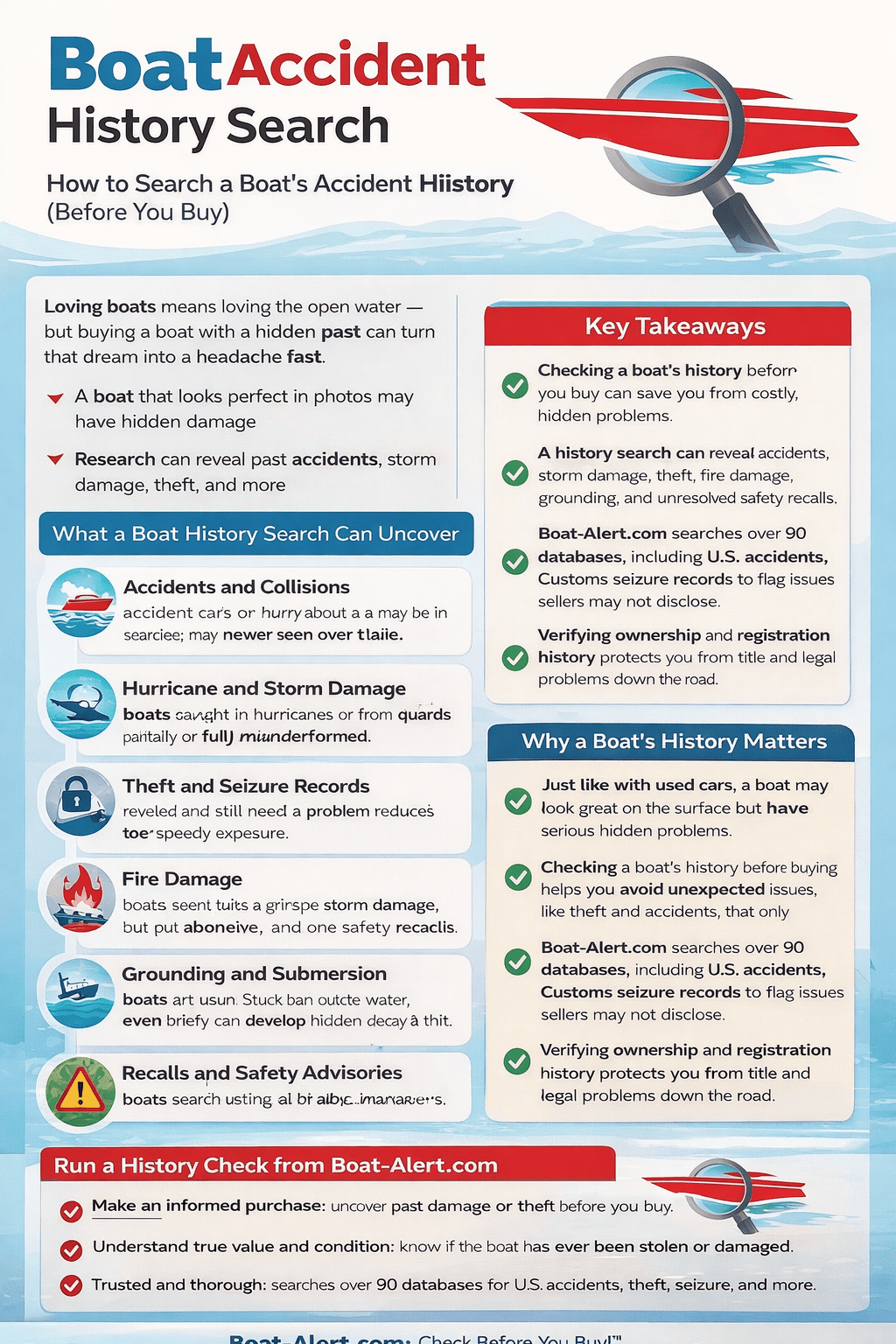
Loving boats means loving the open water — but buying a boat with a hidden past can turn that dream into a headache fast. A boat that looks perfect in photos might have been in a collision, caught in a hurricane, or even sunk and salvaged. The good news: with the right research, you can find out before you hand over a check.
This guide walks through what a boat history search can uncover, why it matters, and how to run one using Boat-Alert.com.
Key Takeaways
- Checking a boat’s history before you buy can save you from costly, hidden problems.
- A history search can reveal accidents, storm damage, theft, fire damage, grounding, and unresolved safety recalls.
- Boat-Alert.com searches over 90 databases, including U.S. accidents, Customs seizure records, to flag issues sellers may not disclose.
- Verifying ownership and registration history protects you from title and legal problems down the road.
- A clean-looking boat can still have serious hidden damage — a history report is the easiest way to check.
Why a Boat’s History Matters
Buying a used boat is a lot like buying a used car: the price might look great, but you need to know what happened to it before it was yours. A boat’s past can include theft, accidents, or weather damage that isn’t visible during a walkthrough or even a survey. Understanding a boat’s ownership history, maintenance record, and any past incidents helps you avoid an expensive surprise after the sale.
What a Boat History Search Can Uncover
Accidents and Collisions
Collisions can affect both the safety and the resale value of a boat, and damage isn’t always visible. A boat can look flawless and still need expensive repairs down the line because of unresolved structural damage from a past accident. Running a history search before you buy helps you spot these red flags early.
Hurricane and Storm Damage
Boats caught in hurricanes or major storms may have spent time partially or fully underwater, which can cause corrosion and other issues that aren’t obvious at first glance. A history search can flag storm-related damage so you know what you’re really buying — and what it might cost to fix.
Theft and Seizure Records
Sellers aren’t always required to disclose whether a boat was previously stolen or seized — for example, in a U.S. Customs action. Boat-Alert.com lets you check a boat’s history for theft and seizure records, which can also point to hidden damage sustained during those events. This is one of the easiest ways to protect yourself before a purchase.
Fire Damage
Fire damage can be some of the hardest to spot, especially if repair work was done well. But even a boat that looks completely restored can have a weakened structure underneath. Since fire damage isn’t always visible during an inspection, checking the boat’s reported history is one of the few reliable ways to catch it.
Grounding and Submersion
Running aground can damage a boat’s structure in ways that aren’t obvious from the surface, and repairs can be costly for a new owner. If the grounding caused environmental damage, that liability can sometimes follow the boat as well. Submersion carries similar risks — a boat that’s been underwater, even briefly, can develop hidden decay that gets worse over time. Checking a boat’s history helps you understand what it’s really been through.
Recalls and Safety Advisories
Boat manufacturers issue recalls regularly, and some flawed models stay in circulation and get resold without the issue ever being fixed. These can range from minor to genuinely dangerous. Checking a boat’s history for open recalls or safety advisories is a simple step that can protect you and anyone who rides with you.
Ownership and Registration History
Unlike cars, boats don’t always come with a fully transparent paper trail — a damaged or previously wrecked boat can sometimes be resold without full disclosure. Verifying ownership and registration history helps confirm the boat’s background is what the seller says it is, and can surface past accidents, major damage, or legal issues tied to the boat. Owner names are usually protected by privacy laws.
Why Run a Boat History Report from Boat-Alert.com
Make a More Informed Purchase
A boat’s history directly affects its current value — prior accidents, water use, and past damage all matter. Checking that history before you buy helps you avoid boats with hidden problems and choose one that actually fits your needs and budget.
Understand True Value and Condition
A history report gives you a clearer picture of what you’re actually buying: whether the boat’s ever been stolen, been in an accident, or had an open safety recall. That information helps you negotiate a fair price and buy with more confidence, whether it’s your first boat or your fifth.
Boat-Alert.com: A Trusted Source for Boat Accident History
When it’s time to check a boat’s background, Boat-Alert.com is a go-to resource. It runs a boat VIN (HIN) lookup across more than 90 databases, helping surface hidden issues like theft, accidents, and U.S. Customs seizure records — information many sellers won’t volunteer on their own.
Using a service like Boat-Alert.com is a simple, low-cost step that can save you from a very expensive mistake. Before you finalize any used boat purchase, running a history check is one of the smartest things you can do.
For Boat Dealers and Brokers
Dealers and brokers benefit from offering boat history checks as part of the sales process too. Providing buyers with a full, honest picture of a boat’s past — accidents, damage, or any other issues — builds trust and helps deals close faster, since buyers aren’t left second-guessing the boat’s condition. It also reduces the odds of disputes or returns after the sale.
Conclusion
Checking a boat’s accident history is one of the smartest things you can do before buying — it protects your safety, your investment, and your peace of mind. Boat-Alert.com makes it easy to check for accidents, storm damage, theft, fire damage, grounding, recalls, and ownership history all in one place. A few minutes of research now can save you from years of unexpected repair bills.
FAQ on Boat Accident History Lookups
What is a boat history report, and why does it matter? It’s a background check for a boat — similar to a vehicle history report for a car. It shows past accidents, damage, theft, or recalls, helping you avoid an expensive surprise after you buy.
What kinds of issues can a boat history search uncover? Accidents and collisions, storm or hurricane damage, theft or seizure, fire damage, grounding or submersion, and open manufacturer recalls or safety advisories.
How can a history search help me avoid a boat with a troubled past? Running a check through Boat-Alert.com can reveal past accidents, theft, or seizure records before you buy — giving you the chance to walk away or negotiate instead of finding out the hard way.
Can it help verify ownership and registration? Yes. Boat title and registration rules vary by state, which makes it easier than you’d think for a boat with a rough history to change hands without full disclosure. A history check helps confirm the paper trail matches the boat.
How does a history report help me judge a boat’s value? Past accidents, damage, and recalls all affect what a boat is actually worth. Knowing that history upfront helps you negotiate a fair price and avoid overpaying for a boat with hidden problems.
Where can I get a reliable boat history report? Boat-Alert.com is a trusted option, searching over 90 databases to check for theft, seizure, and other red flags in a boat’s history.
Categories: To learn more about Boat-Alert.com History Reports for used boats and check a boats title problems online visit: www.Boat-Alert.com