How to Look Up a Boat VIN Number (Boat VIN Lookup Guide)
If you’re buying a used boat, you’ve probably searched Google for a boat VIN lookup. It’s one of the smartest things you can do before handing over your money. Just as a VIN lookup can reveal a used boat’s accident history or salvage title, a boat VIN lookup can uncover theft records, insurance total losses, storm damage, registration history, documentation records, and other issues that may not be obvious during a physical inspection.
The catch is that boats don’t technically have VIN numbers. They have Hull Identification Numbers (HINs). The terms are often used interchangeably because a HIN performs the same function as a vehicle’s VIN. Whether you’re searching for a boat VIN lookup, boat VIN search, boat VIN check, or HIN lookup, you’re looking for information tied to that unique 12-character identification number.
In this guide, we’ll explain exactly how to do a boat vin lookup, what a boat VIN (HIN) is, where to find it, what information you can discover, and why running a professional history report before buying a used boat can save you from an expensive mistake.
Boats Don’t Have VIN Numbers—They Have HINs
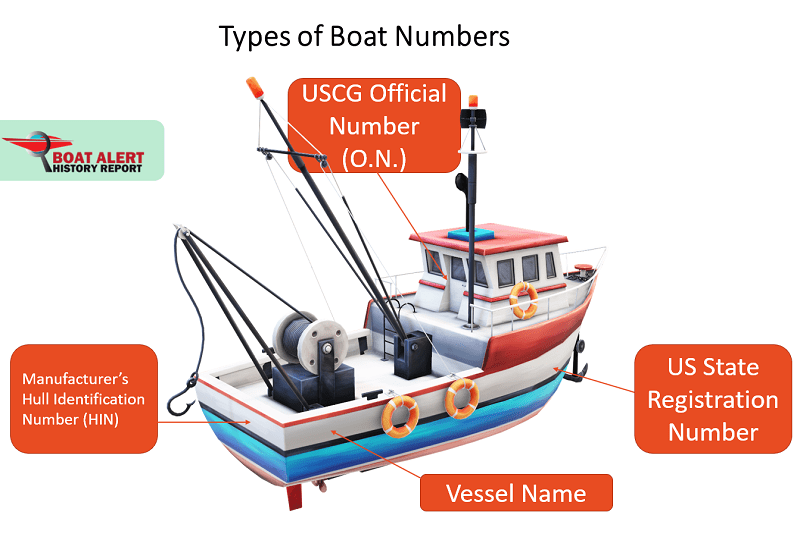
A common misconception among first-time buyers is that boats have Vehicle Identification Numbers (VINs) just like cars. In reality, recreational boats manufactured for sale in the United States since November 1, 1972, are assigned a Hull Identification Number (HIN) by the manufacturer.
Think of the HIN as the boat’s fingerprint. No two boats should have the same number, and unlike a registration number painted on the side of a vessel, the HIN remains with the boat throughout its lifetime.
Because the HIN uniquely identifies the vessel, it is used by manufacturers, insurance companies, lenders, law enforcement agencies, marine surveyors, state registration agencies, and the U.S. Coast Guard to identify the boat.
This is why nearly every boat VIN lookup is actually a HIN lookup.
What Does a HIN Tell You?
Every modern HIN contains 12 characters and follows a standardized format.
For example:
ABC12345D404
Although it may appear to be a random sequence of letters and numbers, each section has meaning.
The first three characters identify the manufacturer through a Manufacturer Identification Code (MIC). The next five characters represent the boat’s unique serial number. The final four characters indicate when the boat was certified or manufactured and identify the model year.
A free HIN decoder can interpret these characters and confirm whether the number appears valid. However, decoding the number is only the beginning. The real value comes from using that HIN to search historical databases for information about the boat’s past.
Where Can You Find the Boat VIN (HIN)?
Before you can perform a boat VIN lookup, you’ll need to locate the Hull Identification Number.
On most boats, you’ll find it molded, stamped, engraved, or permanently attached to the upper right (starboard) corner of the transom—the flat surface across the back of the boat.
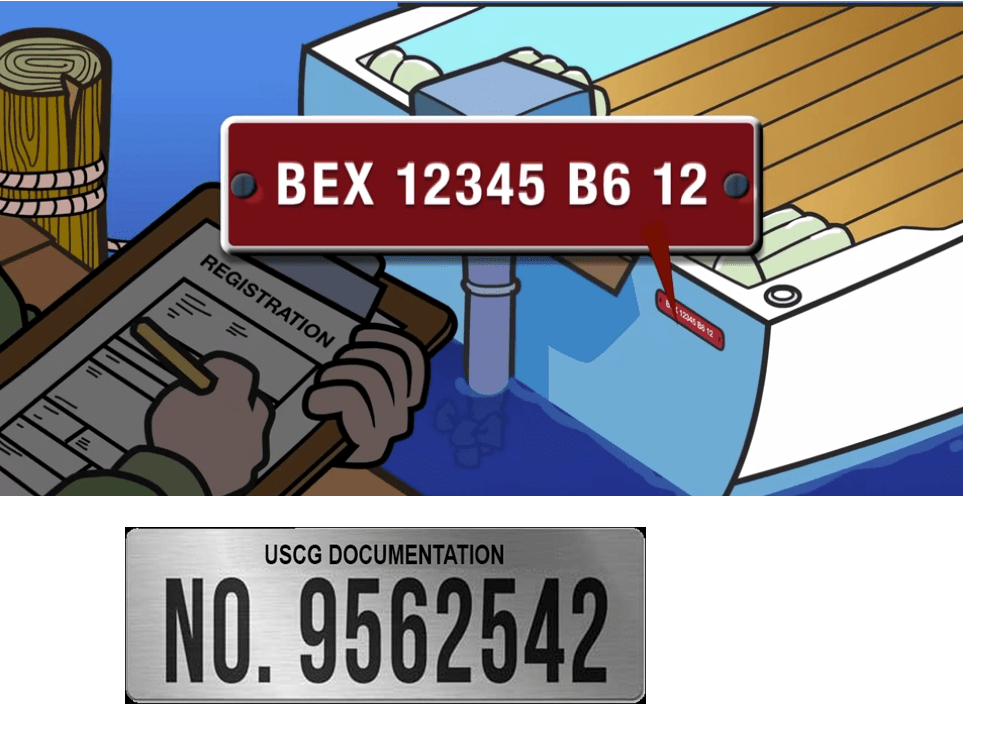
Depending on the manufacturer, it may also appear:
- Under the swim platform
- Inside a cockpit locker
- Inside an engine compartment
- On the title or registration
- On insurance documents
- On the manufacturer’s certificate of origin
- On U.S. Coast Guard documentation
Federal regulations also require manufacturers to place a second hidden HIN somewhere inside the boat. This duplicate number is intended as an anti-theft measure and allows investigators to identify a boat even if the visible HIN has been removed or altered.
If the HIN on the paperwork doesn’t exactly match the HIN permanently attached to the hull, stop and investigate before purchasing the boat.
Why a Boat VIN Lookup Is So Important
Buying a used boat is often very different from buying a used car.
Many boats spend years in saltwater, are exposed to hurricanes and flooding, or sit unused for long periods. Cosmetic repairs can make almost any boat look attractive, but they rarely tell the complete story.
A boat may have:
- Been declared a total loss by an insurance company
- Sunk and later been rebuilt
- Suffered major hurricane or storm damage
- Been stolen and recovered
- Been abandoned at a marina
- Been involved in a serious collision
- Changed names or registrations multiple times
Without checking its history, you may never know.
Even an experienced marine surveyor can only evaluate the boat’s current condition. They generally cannot tell you whether it was stolen ten years ago or written off after a hurricane.
That’s why a boat VIN lookup has become standard practice among knowledgeable buyers, lenders, insurance companies, and marine dealers.
Where is the Boat History Database?
The Boat-Alert.com database combines 92+ nationwide databases into a single place so you can search in a matter of minutes. These include records for stolen boats, marine lien claims, boating accidents, pollution incidents, auctioned boats, factory recalls, and boat manufacturers.

What Can a Boat VIN Lookup Reveal?
A professional boat history search can uncover information that isn’t visible during an inspection.
Depending on available records, you may discover:
Theft Records
One of the most important checks is determining whether the boat has been reported stolen. Purchasing stolen property can result in legal complications, financial losses, and the possible seizure of the vessel.
Salvage and Total-Loss History
Insurance companies often declare boats total losses after fires, hurricanes, floods, sinkings, or severe collisions. Some of these boats are later repaired and sold without buyers realizing their history.
Accident Reports
A history report may identify previous collisions, sinkings, groundings, or other reported incidents that affected the vessel.
Registration History
Previous registration records help verify the boat’s identity and may reveal inconsistencies in ownership history.
Documentation Records
Many larger boats are documented with the U.S. Coast Guard rather than registered solely through a state. These records provide another layer of verification.
Manufacturer Information
A lookup confirms that the HIN matches the advertised manufacturer, model year, and vessel information.
Recalls
Some reports also identify manufacturer recalls affecting the vessel or certain components.
Previous Vessel Names
Many documented vessels change names throughout their lives. A history report can reveal previous names that may assist with additional research.
Free Boat VIN Lookup vs. Professional Boat History Reports
Many websites advertise a free boat VIN lookup, but it’s important to understand what “free” actually means.
Most free tools simply decode the HIN. They’ll tell you:
- Manufacturer
- Model year
- Production date
- Whether the HIN format appears valid
That’s useful—but it doesn’t tell you anything about the boat’s history.
If you’re spending thousands of dollars on a used boat, you’ll likely want far more information than the manufacturing date.
A professional history report searches numerous databases looking for theft records, insurance claims, salvage information, documentation records, registrations, recalls, and other historical data associated with that HIN.
Think of it as the boating equivalent of running a vehicle history report before purchasing a used car.
Boat-Alert.com: A Comprehensive Boat VIN Lookup Service
When it comes to researching a boat’s history, Boat-Alert.com is one of the most comprehensive resources available in North America.
Rather than simply decoding the Hull Identification Number, Boat-Alert searches approximately 90 public and private databases across the United States and Canada to build a detailed history report for a specific vessel.
The report can include:
- Theft checks (U.S. and international)
- Insurance total-loss records
- Salvage history
- NMVTIS watercraft records
- Accident reports
- Hurricane and storm damage history
- Boat recalls
- U.S. Coast Guard documentation
- Canadian registration information
- Manufacturer verification
- HIN validation and decoding
- Previous vessel names
- Registration history
- Printable PDF report
- A 60-day shareable report link
Instead of searching multiple government websites individually, buyers receive a single report that consolidates available information into an easy-to-read format.
For private-party purchases especially, this level of due diligence can make the difference between buying with confidence and inheriting someone else’s expensive problems.
Who Should Run a Boat VIN Lookup?
A boat history report isn’t just for buyers.
It can also benefit:
Private sellers who want to build trust by providing a recent history report with their listing.
Boat dealers looking to verify trade-ins before resale.
Marine lenders evaluating collateral before approving financing.
Insurance companies confirming vessel information.
Marine surveyors supplementing their inspection with historical records.
Whether you’re buying a $5,000 fishing boat or a $500,000 yacht, knowing the vessel’s history helps reduce risk.
Boat-Alert.com HIN Search
A boat’s history affects its value – Search the vessel’s history before you dive in!
Check for accidents, auctions, theft, and registration data.
Don’t get stuck with someone else’s problem boat


Can a Boat VIN Lookup Tell You Who Owns the Boat?
One of the most common questions people ask is whether they can identify the current owner simply by searching the HIN.
In most cases, the answer is no.
Boat ownership information is generally protected by federal and state privacy laws. While a history report may reveal registration events, documentation records, or previous vessel names, it typically will not disclose the current owner’s personal information without a legitimate legal reason.
Be cautious of websites claiming they can instantly reveal private ownership information from a HIN. Many either provide incomplete data or simply redirect users to public records that contain little useful information.
Common Boat HIN Scams
Unfortunately, HIN fraud does occur. Read about HIN Cloning.
Watch for these warning signs:
- The HIN appears sanded, painted over, or altered.
- The paperwork doesn’t exactly match the HIN on the hull.
- Characters appear uneven or use different fonts.
- The seller refuses to provide the HIN before meeting.
- The manufacturer listed doesn’t match the style of the boat.
- The HIN fails basic validation.
If anything seems suspicious, walk away or request additional documentation before proceeding.
Tips for Buying a Used Boat
A boat history report should be just one part of your buying process.
Before completing the purchase:
- Compare the HIN on the hull with every document.
- Hire a qualified marine surveyor.
- Perform a sea trial.
- Inspect maintenance records.
- Verify the engine serial numbers.
- Check for recalls.
- Confirm there are no outstanding liens where applicable.
- Run a professional Boat-Alert history report before paying the seller.
These simple steps dramatically reduce the chances of unpleasant surprises after the sale.
Frequently Asked Questions on Boat VIN Lookups
Is a boat VIN the same as a HIN?
Yes. Although “boat VIN” is the phrase most people use online, the correct term is Hull Identification Number (HIN). They serve the same purpose.
Is there a free boat VIN lookup?
Yes. Free HIN decoders can identify the manufacturer and production date. However, they generally don’t provide theft records, salvage history, insurance claims, or accident information.
How much does a boat history report cost?
Pricing varies by provider. Considering that most used boats cost thousands—or tens of thousands—of dollars, a professional history report is usually one of the least expensive parts of the buying process and can help prevent a costly mistake.
Can I check if a boat has been stolen?
Yes. Professional boat history services search theft databases and other available records to determine whether the vessel has been reported stolen.
Can I run a boat VIN lookup before buying?
Absolutely. In fact, it’s one of the best investments you can make before purchasing any used boat.
Final Thoughts
Whether you call it a boat VIN lookup, boat VIN search, or HIN lookup, the goal is the same: verify the identity of the boat and uncover its history before money changes hands.
A free HIN decoder can tell you who built the boat and when it was manufactured, but it won’t reveal the events that may have shaped the vessel’s past. For that, you’ll need a comprehensive history report.
Boat-Alert.com goes far beyond basic decoding by searching approximately 90 public and private databases across the United States and Canada for theft records, insurance total losses, salvage history, documentation records, registration information, recalls, and much more. Whether you’re buying from a dealer, a marina, or a private seller, spending a few minutes reviewing a Boat-Alert report can provide valuable peace of mind—and potentially save you from a very expensive mistake.
For anyone serious about purchasing a used boat, a professional boat VIN lookup should be as routine as a marine survey or sea trial. It’s a small investment that can help ensure the boat you’re buying has the history you expect.
#Boat #vin #lookup #HIN #BoatVinLookup
Read Related Articles:
- Choosing to go private or with Boat Brokers & Boat Dealers when Selling
- How do you tell if a boat has money owing on it? – Boat Liens
- Best Marine Surveyors in Dallas
- Hull Identification Number lookup – HIN Search
- How to Sell a Boat in Texas
Categories: To learn more about Boat-Alert.com History Reports for used boats and free boat hin lookup visit: www.Boat-Alert.com