Transferring Boat Ownership: What You Need to Know
Owning a boat is an exhilarating experience, but what happens when it’s time to transfer ownership? The process of transferring boat ownership can seem daunting, but with the right information, you can navigate the process with ease. Whether you’re buying or selling a vessel, understanding the nuances of boat registration, titles, and documentation is crucial to ensuring a smooth transaction.
Have you ever wondered, “What steps do I need to take to legally transfer boat ownership?” This comprehensive guide will walk you through the essential requirements and steps involved in transferring boat ownership, from updating registrations and titles to handling out-of-state boats and understanding the associated taxes and fees.
Key Takeaways
- Familiarize yourself with the differences between boat registration and boat titles, as these vary by state.
- Understand the documentation required for transferring ownership, including the Certificate of Documentation (COD) for documented vessels.
- Know the seller’s and buyer’s responsibilities in a private boat sale transaction.
- Navigate the process of transferring titles and registrations, including handling out-of-state boats.
- Be aware of the taxes and fees associated with boat registration and ownership changes.
Understanding Boat Registration vs. Boat Titles
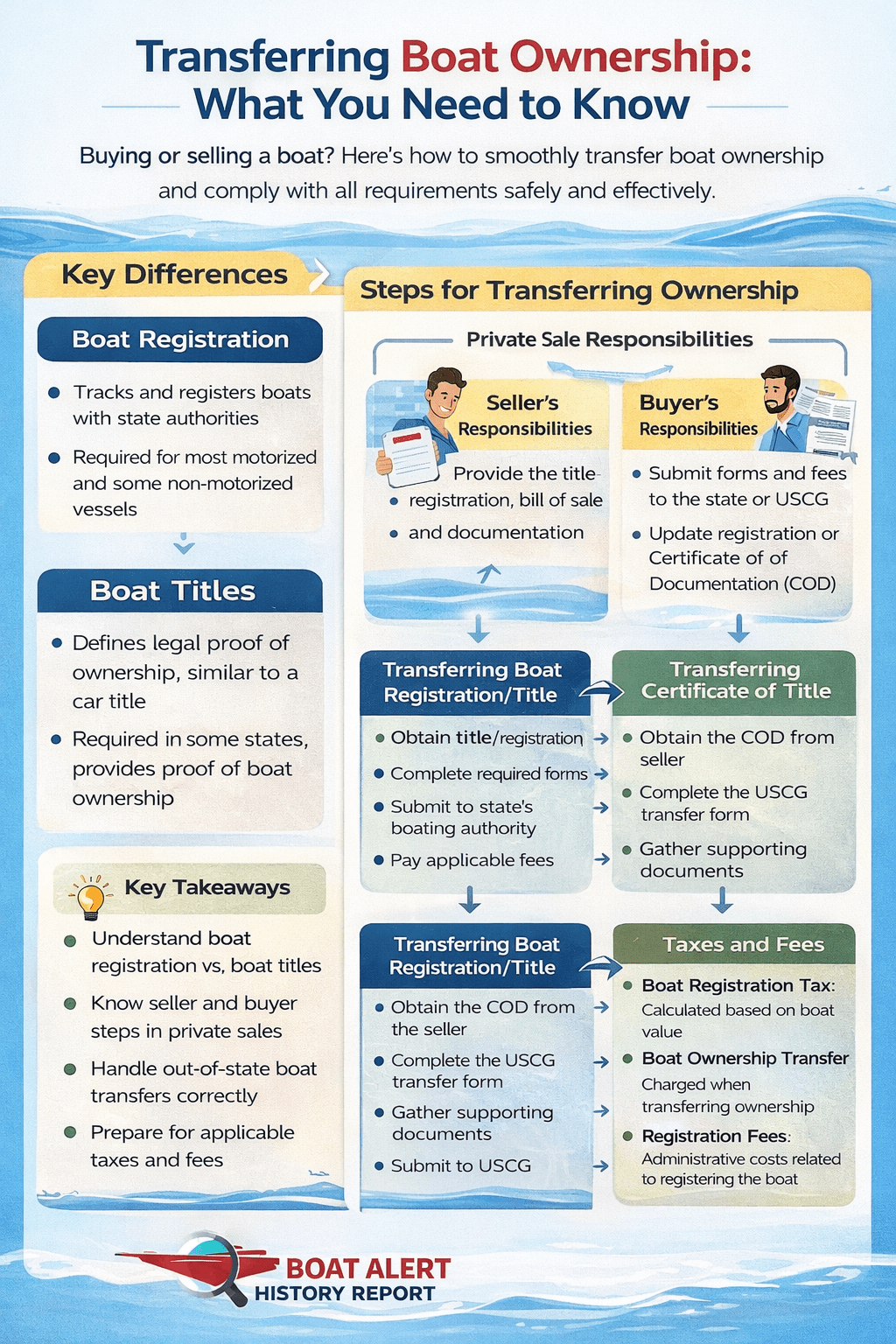
When it comes to boat ownership documentation, understanding the differences between boat registration and boat titles is crucial. Most states require motorized vessels and larger non-motorized boats to be registered, regardless of the boat’s length. This registration process helps authorities track and manage boat ownership within the state. On the other hand, some states also issue boat titles, which are similar to a car title and provide legal proof of ownership.
Vessels Requiring Registration in your State
The specific requirements for boat registration can vary depending on your state’s regulations. Generally, the following types of vessels are required to be registered:
- Motorized boats of any length
- Non-motorized boats, such as sailboats or kayaks, that exceed a certain length (typically 12 or 14 feet)
- Documented vessels (those registered with the U.S. Coast Guard) that are operated within the state’s waters
Some States also issue Titles for Boats
In addition to registration, some states also require boat titles as a form of legal ownership documentation. These titles are similar to the titles used for motor vehicles, providing a clear record of the boat’s current owner. The requirements for obtaining a boat title can vary by state, so it’s important to check the regulations in your area.
| Boat Registration | Boat Title |
|---|---|
| Helps authorities track and manage boat ownership within the state | Provides legal proof of boat ownership |
| Required for most motorized vessels and larger non-motorized boats | Required in some states, similar to a car title |
| Varies by state regulations | Varies by state regulations |
Understanding the registration and titling requirements in your state is an essential first step when transferring boat ownership. By familiarizing yourself with these processes, you can ensure a smooth and successful ownership transfer.
Boat Title Vs. Vessel Documentation
When it comes to boat ownership, the key distinction lies between boat titles and vessel documentation. While both serve to establish legal ownership, the process and requirements differ significantly, particularly for boats that are documented with the United States Coast Guard (USCG).
What is a COD?
For USCG-documented boats, the primary proof of ownership is the Certificate of Documentation (COD). This legal document serves as the definitive record of a vessel’s ownership, superseding any state-issued boat titles. The COD must be properly transferred to the new owner during the ownership change process, ensuring a seamless and legitimate transfer of the boat.
In contrast, state-registered boats typically require a state-issued boat title to prove ownership. This title serves a similar function to a vehicle title, providing a clear record of the boat’s ownership history and any liens or encumbrances attached to the vessel.
Navigating the nuances between boat titles and vessel documentation is crucial for boat owners, both when purchasing a new boat and when transferring ownership. Understanding the differences can help ensure a smooth and compliant ownership transition.
To get the full history of documented boats you can order a Boat Title Abstract
Transferring Ownership: Step-by-Step Guide
Whether you’re buying or selling a boat, the process of transferring ownership can seem daunting. However, by understanding the key steps involved, you can navigate the boat ownership transfer seamlessly. Let’s explore the responsibilities of both the seller and the buyer, as well as the steps to transfer the boat’s Certificate of Documentation (COD) and/or state registration.
Seller’s Responsibilities in a Private Sale
As the seller, you’ll need to provide the buyer with the necessary documentation, including the boat’s title or USCG documentation, a bill of sale, and any outstanding registration or documentation paperwork. It’s crucial to ensure that all information is accurate and up-to-date before the transfer takes place.
Buyer’s Responsibilities in a Private Sale
Once you’ve agreed on the terms of the sale, the buyer must complete several tasks to finalize the boat ownership transfer. This includes submitting the appropriate forms and fees to the state or USCG, updating the boat’s registration or documentation, and obtaining any necessary insurance coverage.
Steps to Transfer the COD
- Obtain the original USCG Certificate of Documentation (COD) from the seller.
- Complete the Application for Initial, Exchange, or Replacement Certificate of Documentation (Form CG-1258).
- Gather any required supporting documentation, such as a bill of sale or proof of ownership.
- Submit the completed form and documentation to the USCG for processing.
Steps to Transfer a Title and/or Registration
- Obtain the current boat title or registration document from the seller.
- Contact your state’s boating authority to determine the specific requirements for transferring the boat title or boat registration.
- Complete the necessary forms and provide any supporting documents, such as a bill of sale.
- Submit the completed paperwork and pay the required fees to your state’s boating authority.
By understanding and following these steps, you can ensure a smooth and successful boat ownership transfer, whether you’re the buyer or the seller.
Handling Out-of-State Boats
Transferring the ownership of a boat that was previously registered or titled in another state can involve additional steps. Each state may have unique requirements when it comes to out-of-state boat ownership transfer, boat ownership transfer across state lines, transferring boat registration between states, or transferring boat title between states. It’s crucial to understand the specific regulations in your state to ensure a smooth and compliant transition.
When dealing with an out-of-state boat, you may need to take the following actions:
- Verify the boat’s current registration and title status in the previous state.
- Determine if the boat requires a new registration, title, or both in your state.
- Gather the necessary documentation, such as the previous state’s registration and title, bill of sale, or proof of ownership.
- Submit the required forms and fees to your state’s boating agency to complete the boat ownership transfer between states.
- Ensure that any outstanding taxes or fees from the previous state are paid before the transfer can be finalized.
By understanding the specific requirements for transferring boat registration between states and transferring boat title between states, you can navigate the process with confidence and ensure your boat is properly documented in its new home state.
Taxes and Fees for Boat Registration
When it comes to boat ownership, it’s essential to understand the various taxes and fees associated with boat registration. These charges can vary significantly depending on your state and the specifics of your boat purchase or transfer.
One of the key taxes you may encounter is the boat registration tax. This tax is typically calculated based on the value of your boat and can range from a few dollars to hundreds or even thousands of dollars, depending on the state. Additionally, some states may also impose a boat ownership transfer tax when you purchase a boat from another owner.
In addition to taxes, you’ll also need to factor in boat registration fees. These fees are typically charged by the state or local government to cover the administrative costs of registering your boat. The fees can range from $10 to $100 or more, depending on the state and the size or type of your vessel.
| Taxes and Fees | Description | Typical Range |
|---|---|---|
| Boat Registration Tax | Tax based on the value of the boat | $0 to $1,000+ |
| Boat Ownership Transfer Tax | Tax charged when transferring boat ownership | $0 to $100+ |
| Boat Registration Fees | Administrative fees charged by the state or local government | $10 to $100+ |
Familiarizing yourself with the applicable boat registration taxes and boat registration fees in your state is an important step in the boat ownership process. By understanding these costs upfront, you can better plan your budget and ensure a smooth and compliant boat registration experience.
Boat Trailer Registration Processes in your State
When transferring boat ownership, the registration of the associated boat trailer may also need to be addressed. The boat trailer registration requirements can vary significantly from state to state. In some cases, the trailer may need to be registered separately from the boat. Understanding the specific regulations in your state is crucial to ensure the proper transfer of the boat trailer’s ownership and registration.
To help you navigate the process, here’s a closer look at state boat trailer registration requirements:
- Many states require boat trailers to be registered separately from the boat, with their own unique registration documents and plates.
- The registration process may involve submitting the trailer’s identification details, such as the vehicle identification number (VIN), and paying applicable fees.
- Some states may also have specific requirements for the transfer of boat trailer ownership when a boat changes hands, such as completing a title transfer or notifying the DMV.
- Failure to properly register or transfer the boat trailer registration could result in penalties or even legal issues when operating the trailer on public roads.
Staying informed about your state’s boat trailer registration requirements is essential when buying, selling, or transferring a boat. By understanding the process, you can ensure a smooth and compliant transition of the boat trailer’s ownership and registration.
Conclusion
Transferring boat ownership can be a complex process, but with the right information and preparation, you can navigate it successfully. By understanding the differences between boat registration and titling, the specific requirements for USCG-documented vessels, and the necessary steps for private sales and out-of-state transfers, you can ensure a smooth and compliant ownership transition.
By following the key steps outlined in this guide, including handling seller and buyer responsibilities, transferring the Certificate of Documentation (COD), and managing the title and registration transfer, you can help ensure a seamless transfer of your boat’s ownership. Additionally, being aware of the taxes and fees associated with boat registration, as well as the trailer registration processes in your state, can further streamline the process.
Ultimately, by adhering to the best practices for boat ownership transfer, you can help protect your investment and ensure a hassle-free experience. Whether you’re buying or selling a boat, this guide provides the essential information you need to navigate the process with confidence and ease.
FAQ
Q: What is the difference between boat registration and boat titles?
A: Boat registration and boat titles serve different purposes. Most states require motorized vessels and larger non-motorized boats to be registered, regardless of the boat’s length. Some states also issue boat titles, which are similar to a car title and provide legal proof of ownership. Understanding the registration and titling requirements in your state is an essential first step when transferring boat ownership.
Q: What is a Certificate of Documentation (COD) and how does it relate to transferring USCG-documented boats?
A: For boats that are documented with the USCG, the transfer of ownership involves different paperwork than a state-registered vessel. USCG-documented boats require a Certificate of Documentation (COD), which serves as the legal proof of ownership. The COD must be properly transferred to the new owner during the ownership change process.
Q: What are the key steps for transferring boat ownership in a private sale?
A: For a private sale, the seller is responsible for providing the necessary documentation, while the buyer must complete various tasks to finalize the ownership transfer. The specific steps vary depending on whether the boat has a title, registration, or USCG documentation.
Q: What additional considerations are involved when transferring a boat that was previously registered or titled in another state?
A: When dealing with a boat that was previously registered or titled in another state, the ownership transfer process may involve additional steps. Depending on the state, there may be specific requirements for transferring the registration or title, as well as handling any outstanding taxes or fees. Understanding the regulations for out-of-state boat ownership transfers is crucial to ensure a seamless transition.
Q: What taxes and fees are typically associated with boat ownership transfers?
A: In addition to the ownership transfer process, boat owners may also need to consider various taxes and fees associated with registration and titling. These can include sales tax, use tax, and registration fees, which can vary depending on the state and the specifics of the boat purchase or transfer. Familiarizing yourself with the applicable taxes and fees is an important step to ensure compliance and avoid any unexpected costs.
Q: How does the boat trailer registration process factor into a boat ownership transfer?
A: When transferring boat ownership, the registration of the associated boat trailer may also need to be addressed. The requirements for trailer registration can differ from state to state, and in some cases, the trailer may need to be registered separately from the boat. Understanding the specific regulations in your state is essential to ensure the proper transfer of the boat trailer’s ownership and registration.
Source Links
- How to Transfer a Boat Title: 12 Steps (with Pictures) – wikiHow – https://www.wikihow.com/Transfer-a-Boat-Title
- How to Transfer Boat Ownership of a USCG Documented Vessel (boat-abstract.com)
- Transferring Ownership of a Boat – https://www.boat-ed.com/northdakota/studyGuide/Transferring-Ownership-of-a-Boat/10102902_46316/
- Boat Registration and Titles – FAQ – https://tpwd.texas.gov/faq/fishboat/boat/registration_and_titles/
Categories: To learn more about Boat-Alert.com History Reports for used boats and boat vin check free visit: www.Boat-Alert.com