Is It Cosmetic or Structural? A Guide to Assessing Fiberglass Damage on Your Boat
A new scratch or stain on your boat is worrying. Is it just a surface mark, or serious damage? Knowing the difference helps you decide when it’s time for professional boat and yacht fiberglass repair in Vancouver.
Understanding the Layers: Gelcoat vs. Fiberglass
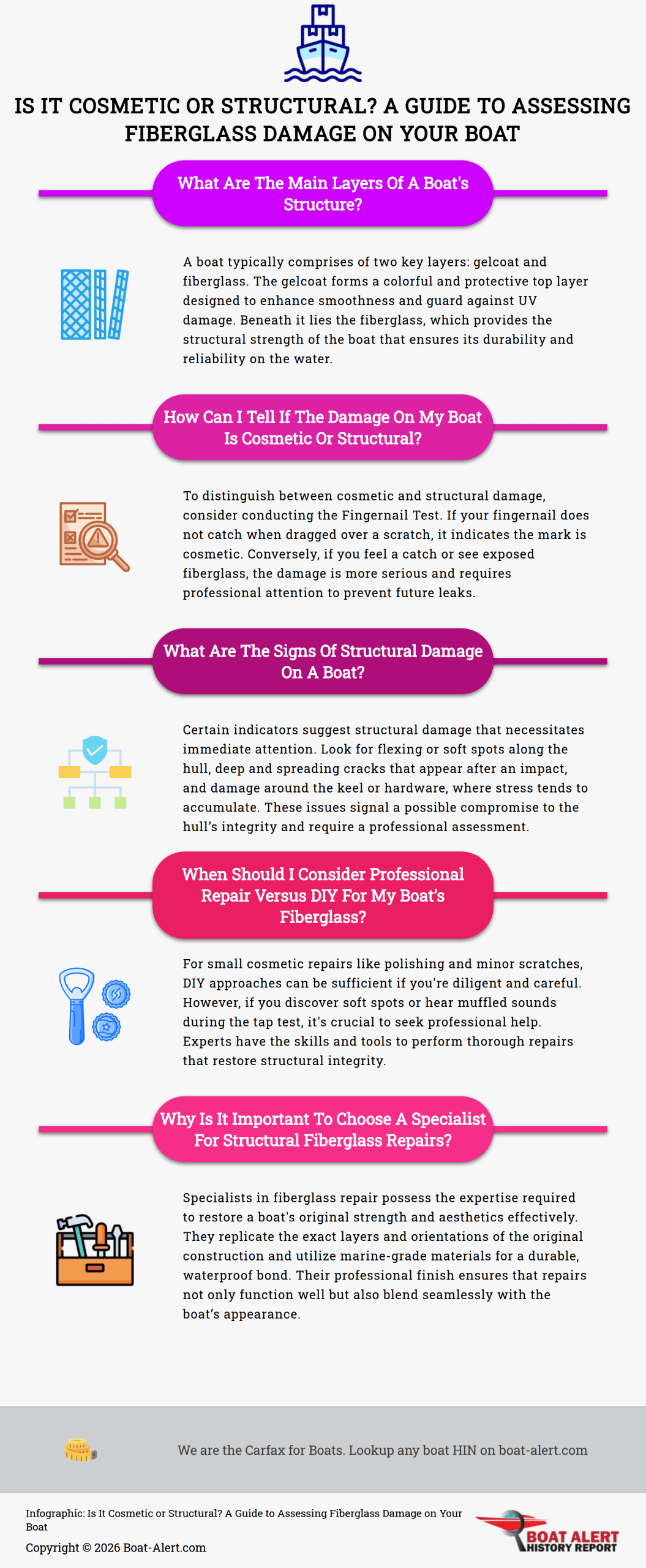
Start by understanding your boat’s layers. The colorful top coat is just a thin skin (the gelcoat) for smoothness and sun protection. The strength is in the fiberglass beneath it.
Most cosmetic issues are just in the gelcoat; if the damage goes deeper, it is a structural concern.
How to Identify Cosmetic Damage
A cosmetic issue is only skin deep. It affects the gelcoat’s finish but does not harm the boat’s structure or seal.
Common Types of Cosmetic Flaws
These common blemishes are more about looks than safety. They typically include:
- Sun-faded and rough patches.
- Shallow scratches.
- A network of fine surface cracks.
The “Fingernail Test” for Scratches
Here’s a quick trick to check a scratch. Drag your fingernail across it.
What you feel and see tells the story:
- Is there no catch? It is cosmetic.
- Catches in a groove? It’s into the gelcoat.
- Do you see white or beige underneath it? That’s the fiberglass. This kind needs repair to stay watertight.
Red Flags of Structural Damage
When the damage reaches the boat’s structural fiberglass, it’s a safety issue. It compromises the hull and can let water in, demanding professional repair. These flaws often stem from an impact, sustained pressure, or hidden water damage.
Key Signs of Structural Problems
Cosmetic flaws are one thing, but some signs mean business. If you see these, it’s time for a professional to take a look.
You should be concerned by:
- Any area that flexes or feels soft, a sign layers are separating.
- Deep, spreading cracks, especially after a bump or grounding.
- Damage near the keel or hardware, where stress is highest.
Always check the BoatAlert history report for accident and salvage records.
The “Coin Tap Test” for Delamination
Hidden damage sometimes has a distinct sound. Give your hull the classic tap test to check for delamination.
The rules are simple:
- Gently tap the area with something solid, like a coin.
- Listen for a bright and consistent “tap” sound; if you hear it, the laminate is likely solid and in good condition.
- Listen for a muffled and dead sound—that’s bad, and means the layers are not bonded.
- Circle any odd-sounding spots for an expert.
Osmotic Blisters: More Than Skin Deep
Those little blisters mean your hull has taken on water. It might look minor, but a cluster of them is a serious problem.
DIY or Call a Pro? (fiberglass damage on vessels)
Once you’ve assessed the damage, the next step is deciding on a course of action. This decision hinges on the type, extent, and location of the damage, as well as your own skill level.
When DIY Might Be Appropriate
You can handle small cosmetic repairs. Polish out oxidation and smooth over minor scratches, but keep it to the top layer. Be patient, and don’t expect a showroom finish.
When Professional Repair is Non-Negotiable
If the tap test sounds wrong or you find a soft spot, don’t guess. Cracks need to be ground out completely, and blisters require controlled drying. These are not DIY fixes.
For safety and quality, this is when you need boat and yacht fiberglass repair in Vancouver from an expert like Ignition Marine.
Why Choose a Specialist for Structural Repairs
This is not a handyman’s job. A pro fiberglass repair restores your boat’s original strength and looks, something that takes specific skill.
A specialist will:
- Replicate the exact layers and orientation of the original fiberglass.
- Use the right marine-grade materials for a permanent, waterproof bond.
- Finish and fair the repair so it’s not just strong, but disappears visually.
The Cost of Delay: Why Assessment Matters
Letting a structural issue slide does lasting damage. Water intrusion gets worse, safety is compromised, and your investment loses worth. A professional evaluation is the smart first step to a true fix.
Assess with Confidence, Repair with Expertise
Spotting real damage saves you from stress. Do the quick checks to decide if it’s skin-deep or serious.
For any crack, soft spot, or blemish you want gone, the smart next step is a professional assessment and repair.
For a lasting repair, trust a reputable provider, like Ignition Marine, in boat and yacht fiberglass repair in Vancouver.
Read Related Articles:
- What to Look for on a Sea Trial
- Arizona Boat Registration – Need to know facts in AZ boating
- How to Sell a Boat On Facebook Marketplace?
- Tennessee Boat Registration
- Best Boat Dealers in Ohio
Categories: To learn more about Boat-Alert.com History Reports for used boats and hin number lookup visit: www.Boat-Alert.com