Buyers: How to Spot Scam Boats
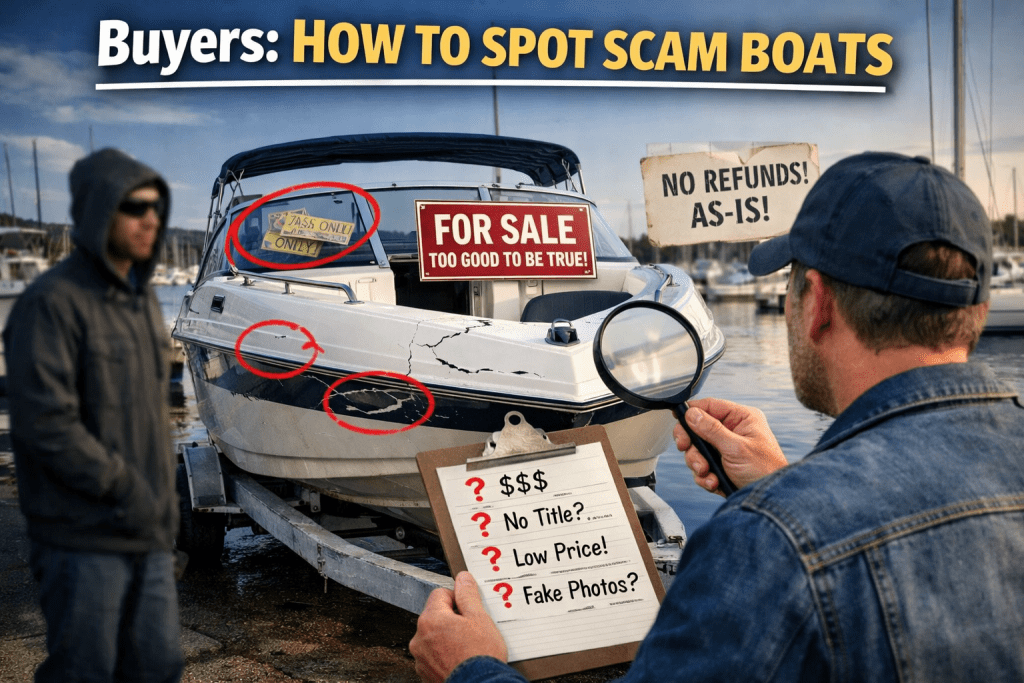
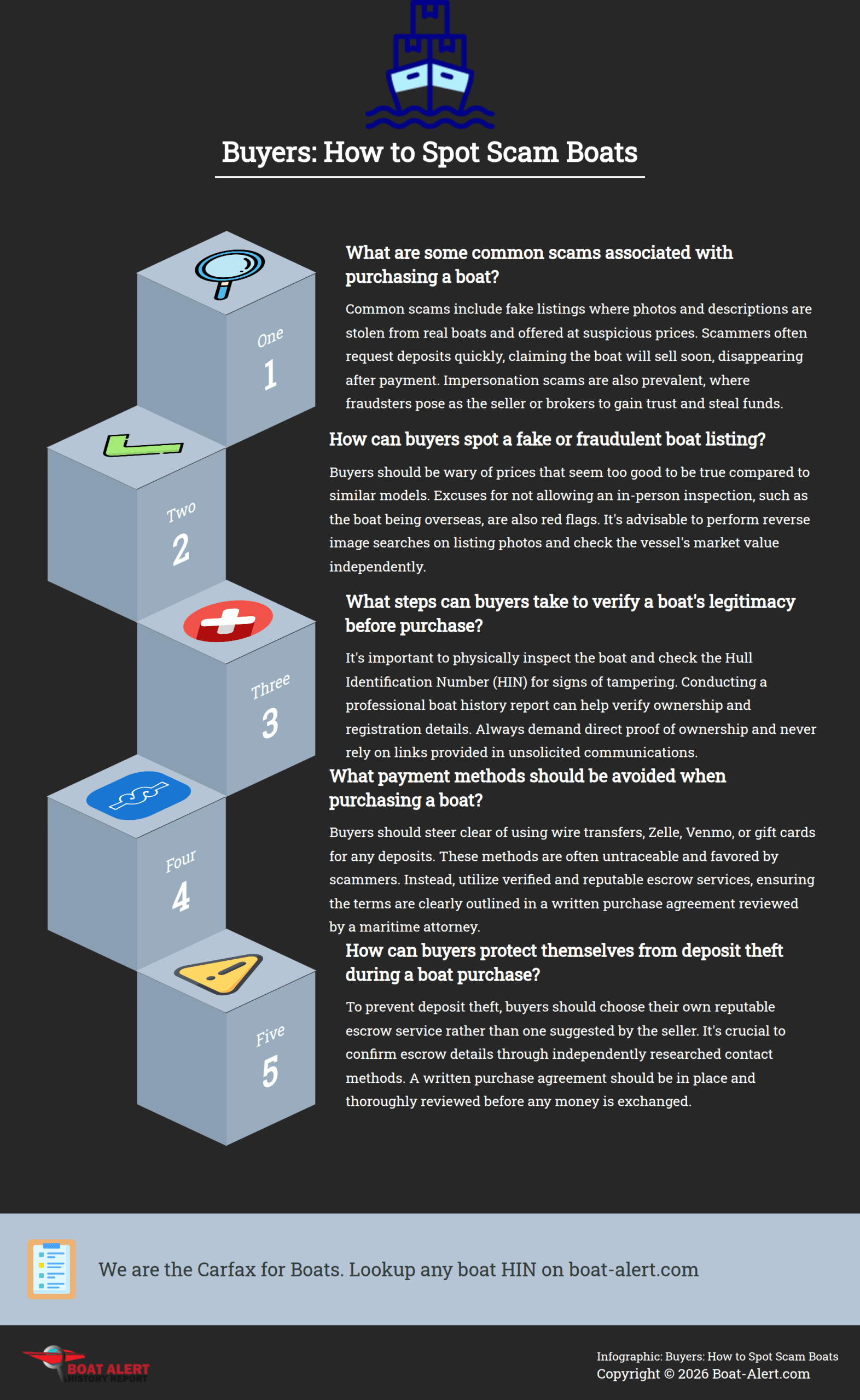
Purchasing a boat ranks among life’s most rewarding experiences, offering freedom on the water and lasting memories with family and friends. Yet in today’s digital marketplace, the same tools that make shopping convenient—online listings, remote negotiations, and interstate or international deals—also open doors for fraud.
Scammers target high-value marine transactions through phony advertisements, stolen deposits, concealed liens, forged titles, altered Hull Identification Numbers (HINs), and clever payment tricks.
The good news? Most sellers and brokers operate honestly. With proactive steps, independent verification, and the right professionals on your side, you can dramatically lower your risk and focus on finding the perfect vessel. This guide delivers expanded, practical advice drawn from real-world patterns, official resources, and proven safeguards to help you navigate every stage confidently.
Table of Contents
Why Boat Deals Attract Fraudsters
Large purchase prices, emotional buyer enthusiasm, buyers who live far from the boat, and patchwork documentation systems (state titles versus federal USCG documentation) create ideal conditions for scams. Fraudsters exploit urgency, reluctance to inspect in person, and assumptions that “it won’t happen to me.” Online platforms amplify the problem by allowing quick copying of legitimate ads.
Pre-Purchase Scams: Spot Them Early and Protect Yourself
Fake or Phantom Listings
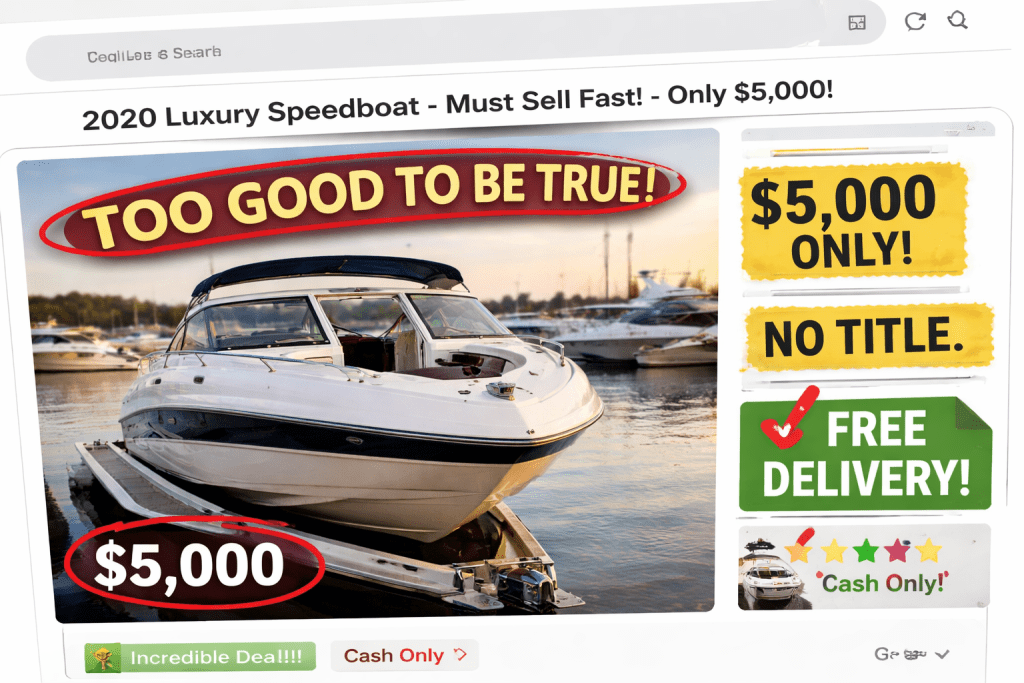
Criminals steal photos, specs, and descriptions from real boats on reputable sites and repost them at suspiciously low prices—or even “free”—on Facebook Marketplace, Craigslist, or social media.
Realistic example: You find a 2023 center-console listed far below market value with the pitch “owner relocating overseas, must sell fast.” The seller pushes for a small “holding deposit” via Zelle or Venmo, citing multiple other offers. After payment, communication stops and the boat never existed.
Warning signs:
- Price too good to be true compared with similar models.
- Excuses for no in-person viewing (“boat is stored overseas” or “just detailed”).
- Immediate deposit requests before inspection.
- Generic emails with numbers, poor grammar, or inconsistent details.
Expanded advice to protect yourself:
- Perform a reverse-image search on listing photos using Google or TinEye to see if they appear elsewhere.
- Research fair market value yourself on YachtWorld, Boat Trader, NADA Guides, or J.D. Power.
- Insist on viewing the boat in person or hiring a local representative.
- Physically locate and photograph the HIN on the starboard transom (or other approved location). Check for tampering—fresh paint, scratches, or uneven stamping are red flags.
- Run a professional boat history report using the HIN right away to verify ownership, registration, and consistency across records.
- Start with official USCG HIN validation guidelines at uscgboating.org for basics on what a legitimate HIN looks like.
Impersonation Scams
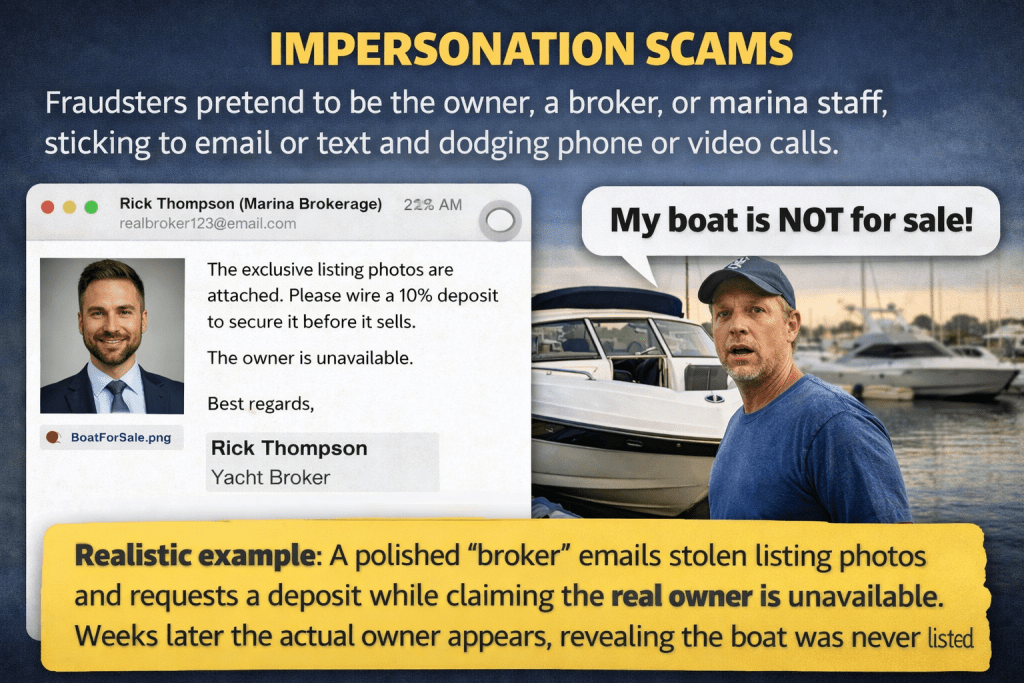
Fraudsters pretend to be the owner, a broker, or marina staff, sticking to email or text and dodging phone or video calls.
Realistic example: A polished “broker” emails stolen listing photos and requests a deposit while claiming the real owner is unavailable. Weeks later the actual owner appears, revealing the boat was never listed for sale.
Expanded advice:
- Demand direct proof of ownership (title, registration, or USCG Abstract of Title).
- Contact any claimed broker or dealer only through their official website or published phone number—never links in unsolicited messages.
- For federally documented vessels, order the official Abstract of Title yourself directly from the National Vessel Documentation Center (use form CG-7043 at dco.uscg.mil/nvdc or their eStorefront). This shows full ownership history and recorded liens.
- Search the seller’s name and phone number online; legitimate contacts usually have verifiable history.
Scams During the Purchase Process: Lock Down Every Step
Deposit Theft
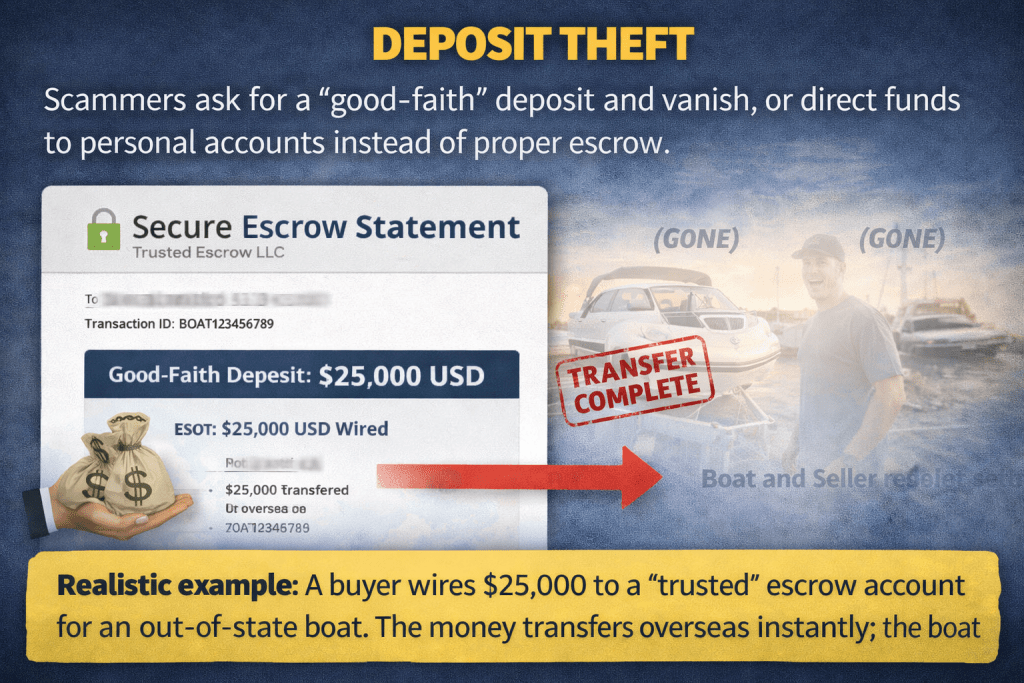
Scammers ask for a “good-faith” deposit and vanish, or direct funds to personal accounts instead of proper escrow.
Realistic example: A buyer wires $25,000 to a “trusted” escrow account for an out-of-state boat. The money transfers overseas instantly; the boat and seller disappear.
Stronger safeguards:
- Never use wire transfers, Zelle, Venmo, gift cards, or crypto for deposits.
- Choose and verify your own reputable escrow service (e.g., Escrow.com) or a licensed marine title company—never one suggested solely by the seller.
- Require a written purchase agreement reviewed by a maritime attorney before any money moves.
- Confirm escrow details by phone using a number you independently researched.
Title, Lien, and Ownership Misrepresentation
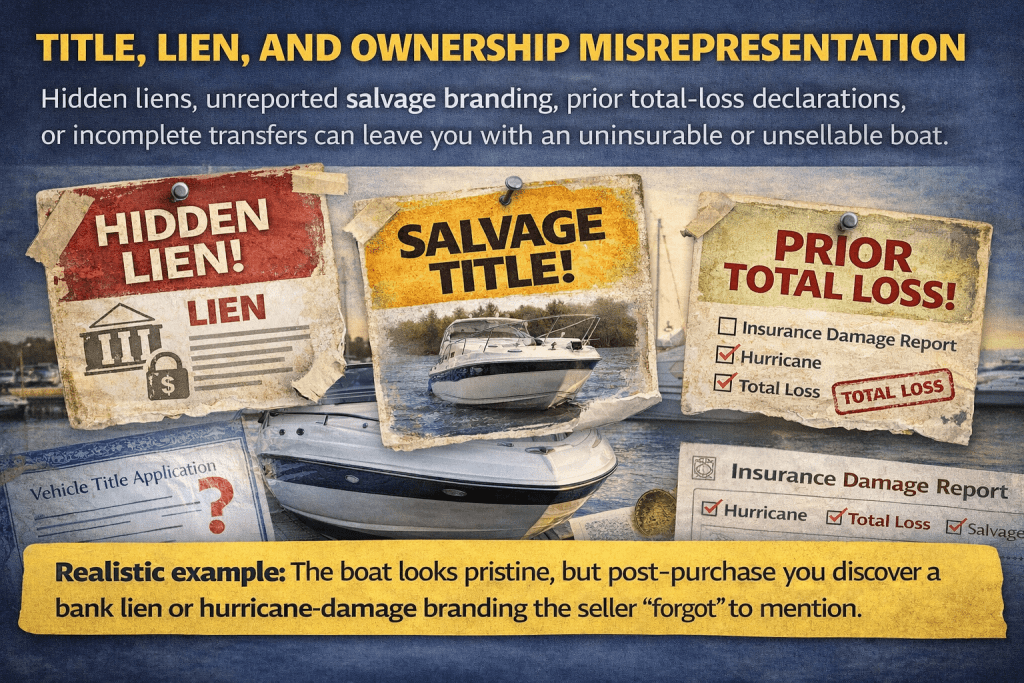
Hidden liens, unreported salvage branding, prior total-loss declarations, or incomplete transfers can leave you with an uninsurable or unsellable boat.
Realistic example: The boat looks pristine, but post-purchase you discover a bank lien or hurricane-damage branding the seller “forgot” to mention.
Expanded advice:
- Always order a comprehensive boat history report that flags liens, branding, damage, and theft records.
- For documented boats, obtain the USCG Abstract of Title independently.
- Demand signed lien releases and clear title documents before funds are released.
- Cross-check state vessel registration databases or services like MarineTitle.com where applicable.
Vessel Identity Fraud and Stolen Boats
HINs may be altered, removed, or cloned; stolen vessels sometimes receive new documentation. You should also learn about HIN Cloning.
Realistic example: A seemingly perfect 26-foot walkaround is seized months later because its HIN was subtly changed and it was reported stolen in another state.
Action steps:
- Take clear photos or a physical rubbing of the HIN and compare it exactly to every document.
- Cross-reference with a detailed history report and, when available, the National Insurance Crime Bureau (NICB) stolen-boat database.
- For rebuilt, homemade, or reassigned-HIN boats, bring in a surveyor experienced with theft recovery cases.
- Never ignore obscured or freshly painted HIN areas—treat them as suspicious until proven legitimate.
Concealed Damage or Total-Loss History
Cosmetic fixes can hide grounding, flood, fire, or storm damage that affects safety and value.
Realistic example: A “like-new” 2024 model turns out to have undisclosed flood damage from a prior hurricane, causing hidden structural problems later.
Expanded advice:
- Use a history report to uncover insurance claims, total-loss events, or salvage titles.
- Hire your own accredited marine surveyor (search SAMS at marinesurvey.org or NAMS at nams-cms.org directories) for a complete out-of-water survey and sea trial.
- Share the history report with your surveyor so they can target high-risk areas.
- Never accept a surveyor recommended only by the seller or broker.
Payment and Escrow Manipulation
Fake cashier’s checks, overpayment “refunds,” spoofed wiring instructions, and phony escrow websites are common near closing.
Realistic examples:
- A counterfeit check for more than the price arrives; the scammer asks you to wire back the difference—then the check bounces.
- An email with “updated” wiring instructions routes your funds to the scammer.
- A convincing but fake escrow site mimics a real one.
Strong defenses:
- Verify every payment instruction verbally with a phone number you looked up yourself.
- Refuse any overpayment or refund requests.
- Stick exclusively to established brokerage trust accounts or well-known escrow services.
- Ignore artificial deadlines (“other buyers waiting,” “leaving the country tomorrow”).
- For extra security on high-value deals, have a maritime attorney or documentation service handle closing.
The Power of Early Due Diligence
A professional boat history report is one of the smartest first investments you can make. It delivers ownership timelines, multi-jurisdiction registration data, title branding, accident records, theft history, and recalls. Use it at the very start of serious interest to confirm the boat’s identity, test the seller’s story, and arm your surveyor with context. It is not a replacement for a physical survey, sea trial, or legal review—but it closes many blind spots early.
Additional Best Practices Checklist Before You Close
- Work with licensed brokers or dealers whenever possible—they add built-in protections and reputation safeguards.1
- Meet the seller in person or send a trusted local contact when distance is involved.
- Budget upfront for a history report, independent survey, title search, escrow fees, and attorney review—these are far cheaper than potential losses.
- Trust your gut: if the deal feels too good to be true, involves unexplained pressure, or the seller resists standard checks, walk away. Legitimate parties welcome thorough verification.
- For documented or high-value vessels, involve a maritime attorney from the beginning.
- After purchase, register or document the boat immediately in your name and update insurance right away.
- If you suspect fraud at any point, report it promptly to the FTC (reportfraud.ftc.gov), your state consumer protection office, the listing platform, and marine industry groups such as the International Yacht Brokers Association (IYBA).
Buying a boat should spark excitement, not anxiety. By combining independent verification, secure payment methods, professional inspections, and objective data checks, you protect your investment and enjoy peace of mind. When significant money is on the line, skipping steps is never worth the risk.
Helpful External Resources from Trusted Organizations:
- US Coast Guard National Vessel Documentation Center: dco.uscg.mil/nvdc
- USCG Boating Safety – HIN Validation Guidelines: uscgboating.org
- Society of Accredited Marine Surveyors (SAMS): marinesurvey.org
- National Association of Marine Surveyors (NAMS): nams-cms.org
- Federal Trade Commission Consumer Alerts on scams: consumer.ftc.gov
- Boat Trader Security Tips: boattrader.com/security
- https://www.boat-alert.com/blog/scams-against-boat-sellers/
- International Yacht Brokers Association (IYBA) fraud awareness: iyba.org
Stay vigilant, ask direct questions, and prioritize transparency. With these tools and habits, you’ll find a great boat safely and confidently. Happy (and secure) boating!
#boatbuying #scams #fakeboat #fakepaperwork #fraud #boating
Read Related Articles:
- Vermont Boat Registration
- South Carolina Boat Registration
- Boaters: Which life jacket is best for you?
- Beware: Boat Consignment Fraud [With Examples]
- DNR Boat Registration Lookup
- See Boat-Alert.com Blog for more details on scams and boat titling. ↩︎
Categories: To learn more about Boat-Alert.com History Reports for used boats and boat hin check free visit: www.Boat-Alert.com