JetSki Pre-Purchase Inspection Guide
Are you looking at a used jet ski but worried about hidden problems? These issues could lead to expensive repairs. A pre-purchase inspection is essential to avoid these costs. But what does it include, and why is it so important? Let’s explore the details.
Inspection only covers the surface and current state of the jetski – Boat Alert History reveals the rest (title, registration, theft… etc).
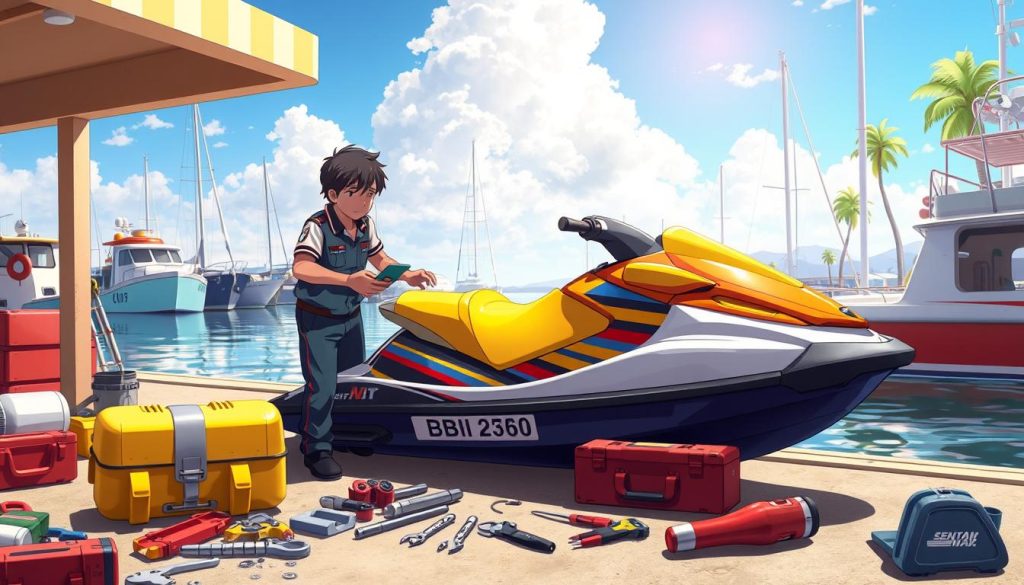
Why Pre-Purchase Inspections Matter for a Jetski
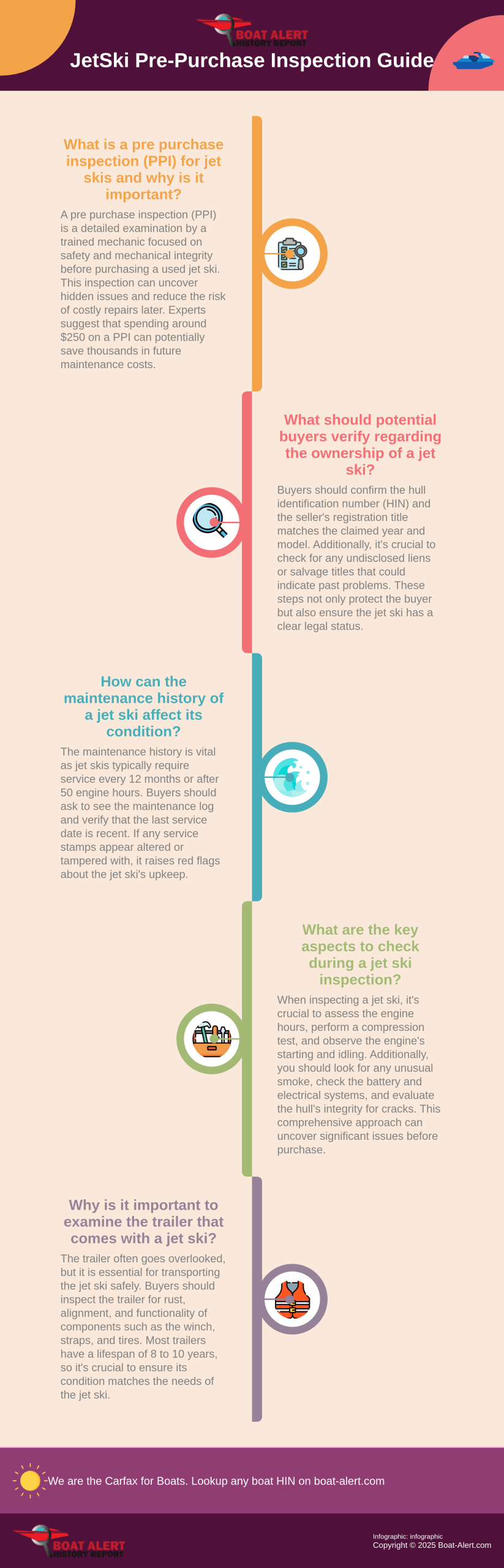
A pre-purchase inspection (PPI) is a detailed evaluation by a trained mechanic (h2ocraft.com). It can reveal safety issues, damage, and mechanical wear before you buy. Getting a PPI helps you avoid buying a “lemon” and prevent unexpected repair bills (h2ocraft.com & mariner.co.nz). In fact, experts say spending around $250 on an inspection can save you thousands in future repairs (mariner.co.nz). By inspecting the engine and drive systems first, you save time and money in the long run. A thorough inspection also gives you negotiating power – if problems are found, you can ask for a lower price or walk away (jetskishop.com.)
Preparing to Buy
- Verify Ownership: Check the hull identification number (HIN) or VIN on the ski. Make sure the seller’s registration/title matches the claimed year and model. Also confirm there are no undisclosed liens or salvage titles.
- Review Service Records: Ask to see the maintenance log. Jet skis need service roughly every 12 months or ~50 engine hours. Confirm the last service date is recent. Be cautious if service stamps look tampered or rew ritten.
- Ask Usage History: Inquire whether the ski was ridden in saltwater or freshwater (and whether it was flushed afterward). Saltwater use causes faster corrosion. Also ask how it was stored (covered, indoors, etc.).
- Check Documentation: Ensure the owner’s manual and all keys/lanyards (or PIN codes) are included. Verify any factory warranty is still valid and transferable.
- Create a bill of sale for the jetski
- Lookup the PWC History report on Boat-Alert.com
Inspection Checklist
Engine and Mechanical
- Engine Hours: Low hours are better. Aim for around 100 hours or less; anything above ~300 hours is a red flag. (For context, 30 hours/year is average use) Consider climate: 200 hours in a short season might be like 100 hours in a year-round warm climate.
- Compression Test: If possible, perform a compression test on all cylinders. Uneven or low compression indicates wear or corrosion (for example, saltwater use can corrode internal parts)
- Start & Idle: Try starting the engine. It should crank easily (a dead battery is a common easy fic Listen for smooth idling; any sputtering or roughness under throttle is a warning. Check for unusual smoke (white = coolant leak, blue = oil burning).
- Battery & Electronics: Inspect the battery terminals for corrosion and ensure it holds a charge. Test the dashboard: any warning lights or error codes should be noted. If you can, have a technician scan the onboard computer for fault codes (modern PWCs store errors in their ECU).
- Cooling & Exhaust: For Sea-Doo models, check coolant level (they use closed-loop cooling). Look at exhaust outlets for rust or blockages. Verify that any cooling intake isn’t damaged.
Hull and Exterior
- Hull Integrity: Examine the hull (top and bottom) for cracks, gouges, or soft spots. Get down to see underneath if you can. Run your hand along the hull bottom in good light: surface scuffs are normal, but deep scratches or exposed fiberglass are bad. Paint missing down to fiberglass is a warning sign.
- Paint & Repairs: Look for mismatched paint or poorly repaired sections. A ski with covered-up damage or irregular paint may have hidden problems. Check rub rails and bumpers – missing or replaced parts can also signal rough use.
- Water in Hull: Open the engine compartment and check the bilge area. A small amount of water (a cup or two) is normal, but a large puddle means a leak or a missing drain plug. (Quick tip from experts: taste the water to see if it’s salty – saltwater inside can mean a more serious pump seal leak.)
- Trailer (if included): Many buyers forget the trailer. Inspect it closely: look for rust on the frame, check that the skids or rollers align with the hull, and test the winch, straps, lights, and tires. Note that most trailers wear out after ~8–10 years, so rust or bad bearings are common issues.
Jet Pump, Intake, and Running Gear
- Intake Grate: Ensure the intake grate (and any reverse bucket) is clean, undamaged, and securely attached. Debris here (like seaweed or plastic) can grind up the pump and reduce performance.
- Impeller & Liner: Remove the intake grate if possible. The impeller blades should be intact and free of nicks or bends. The surrounding liner (wear ring) should not be excessively worn. Any deep gouges or missing chunks mean the pump isn’t sealing well. (As one jetski shop warns, a damaged propeller can “seriously leave you stranded”.)
- Jet Pump: Check the pump housing for cracks or corrosion. Spin the impeller by hand – it should turn freely with minimal lateral play.
Seats and Interior
- Upholstery: Examine all seat covers and grips for tears, cracks, or faded/dry vinyl. Even small rips can admit water and cause mold or electrical problems. Press the seats – the foam should feel firm, not gummy. Loose stitching or aftermarket seat covers (fine if well-done) should be noted.
- Compartments: Open any storage compartments and look for water, mildew, or rust on hardware. This can reveal hidden leaks.
Controls and Electronics
- Ignition & Keys: Ensure you have the correct lanyard/key or remote fobs. (Newer Yamahas, for example, use a PIN code in the dash.) Missing keys/fobs can be an expensive headache to replace.
- Steering & Throttle: Turn the handlebars/steering fully from side to side – it should move smoothly and lock positively. Test the throttle and reverse lever by hand; cables should operate without sticking.
- Dashboard Gauges: With power on, check that all gauges and lights function (speedometer, tach, hour meter, etc.). Unlit or flickering gauges can indicate wiring issues.
- Bilge Pump (if equipped): Some skis have a bilge pump. If so, pour a little water in the hull and see if it pumps out (you may need a moment for it to activate). A working bilge pump keeps water from building up.
On-Water Test (If Possible)
- Run the Ski: A short test ride is the ultimate check. Pay attention to how it accelerates and handles. Steering should be responsive and stable (no excessive pull to one side). Acceleration should be smooth and powerful for the engine size.
- Vibrations/Noises: Listen for rattles or whining under throttle (could be bearings or alignment issues). Feel for excessive vibration from a bad impeller or misalignment.
- Warning Lights: Watch the dash for any lights or alerts during the run.
- Seller Cooperation: A reasonable seller should allow at least a brief sea trial. Dealers often handle the hassle by inviting you to a shop for a compression test or inspection, then letting you ride it shortly after. If the seller outright refuses any test, that’s a red flag.
Questions to Ask the Seller for the PWC
- Service History: Who performed maintenance – dealership or independent mechanic? Can they show receipts? (Dealers may knowingly reveal truth to ensure future business, but always confirm.)
- Major Repairs/Parts: Has anything been replaced (like engine mounts, exhaust, impeller, etc.)? (One buyer learned of broken engine mounts only after an inspection, which lowered the price.)
- Usage Habits: How and where was the ski used? (Skiing on rough beaches, jumping waves, or hitting logs can cause hidden damage.)
- Off-Season Care: Was the ski winterized each year? Proper winterization (draining and lubricating) is critical, especially in cold climates.
- Any Accidents or Flooding: Has the ski ever been submerged or in a collision? Transparency here is key to avoid buying flood-damaged watercraft.
- Verify Service Records: Compare the service book entries with dealer records if possible. Sellers have been caught lightly erasing and rewriting service stamps to fake maintenance.
- Fresh vs. Saltwater: If used in saltwater, confirm it was flushed after each use. Salt causes corrosion that can appear inside the engine or exhaust. Even compression issues can stem from saltwater rust.
- Warranty and Extras: Ask if any transferable warranty remains, and whether accessories (cover, life jackets, custom parts) are included.
Maintenance & Storage Tips for a used PWC
Taking care of a used jet ski extends its life and helps avoid future PPI nightmares:
- Storage: Keep the ski covered in a dry place (garage or shelter). UV rays and rain deteriorate the engine and hull over time. Use a fitted, breathable cover. Store the ski on stands or blocks to keep it off damp ground.
- Post-Ride Rinse: After every ride, especially in saltwater, flush the engine and pump with fresh water and run it briefly. Change the oil if needed. This prevents salt buildup and oil degradation.
- Pre-Season Checks: Before each season (or after long storage), check oil levels (run engine 30 seconds first) and coolant (Sea-Doos). Look for any leaks or new corrosion.
- Regular Service: Even if the ski was well-maintained by the previous owner, establish a new service schedule. Follow the manufacturer’s recommendations for oil, filters, and pump lube.
- Winterization (if applicable): In cold climates, properly drain and antifreeze the engine. Moisture left in the engine can freeze-crack components.
Inspection Summary Checklist for Jetski
| Component | What to Check | Warning Signs |
|---|---|---|
| Engine Hours/Records | Hours (ideal <100), complete service log | High hours, gaps or tampering in records |
| Compression & Start-up | Cylinder compression test, engine starts easily | Low/uneven compression, hard starting |
| Battery & Electronics | Fully charged battery, no corrosion, scan for codes | Weak/dead battery, stored fault codes |
| Hull (Top & Bottom) | No cracks, smooth running surface, solid paint | Exposed fiberglass, soft spots under scuffs |
| Intake & Pump | Grate clear, impeller blades intact. | Missing grate, bent/chipped impeller blades |
| Seats/Upholstery | No tears or water damage; firm foam | Rips, mold, sagging or degraded foam |
| Controls/Steering | Cables move freely; no play in steering | Stiff or erratic steering, loose cables |
| Bilge Pump (if present) | Pump removes added water | Pump fails or discharges poorly |
| On-Water Performance | Smooth steering, full throttle response | Pulls to side, sputtering, unusual vibration |
A professional pre-purchase inspection is ideal, but even on your own you can cover the essentials above. By following this guide and asking the right questions, first-time buyers can avoid common pitfalls and enjoy safe, reliable fun on the water.
Understanding Pre-Purchase Inspections
Buying a used jet ski is exciting, but you need to make sure it’s reliable and well-kept. A pre-purchase jet ski inspection is key. It’s done by a certified mechanic who knows your future jet ski’s model inside out.
What Is a Pre-Purchase Inspection?
A pre-purchase inspection checks a used jet ski’s condition thoroughly. The inspector looks at the engine, hull, and more. They find safety issues, damages, or wear and tear. This helps you know what you’re buying before you buy it.
Relying only on an inspection is like buying a house without checking the title – risky.
Why Should You Get a Pre-Purchase Inspection?
A pre-purchase personal watercraft evaluation can save you from costly repairs later. If problems are found, you might get a better deal or avoid the purchase. It also makes sure your jet ski is in top shape, giving you peace of mind.
Getting a detailed used jetski inspection checklist before buying is wise. It protects your investment and ensures your jet ski is in good hands.
Key Areas to Inspect
When you do a used jetski inspection checklist or watercraft pre-purchase inspection checklist, focus on key areas. These help you understand the jet ski’s condition. Look at engine hours, do a compression test, and check the hull.
Engine Hours and Service Log
Engine hours tell you a lot about a jet ski’s condition and life span. They can be “low-hour” or “high-hour” based on use. Checking the pwc inspection service log shows how well the jet ski was maintained. This helps you understand its jetski condition appraisal.
Compression Test
A compression test is key to knowing the engine’s health. It shows if the engine’s cylinders are working right. This test gives insight into the engine’s state and future problems.
Hull Examination
Inspecting the jet ski’s hull is vital. Look for damage like cracks, chips, or dents. Also, check for bad repair jobs that could weaken the hull. The keel and stern areas are especially prone to damage.
Evaluating Seats and Upholstery
When you’re checking out a used jetski, watercraft, or PWC, don’t skip the seats and upholstery. Even small tears or holes can let water in and cause damage. Some minor issues might be fixed easily, but big problems could mean bigger issues with the jet ski.
As you look at the seats and upholstery, keep an eye out for:
- Condition of the Upholstery: Look for any tears, rips, or too much wear. Make sure the upholstery is in good shape and not cracked or dry.
- Water Damage: Check for water seepage signs like discoloration or mold. This could mean a bigger problem with the jet ski’s seals or hull.
- Seat Cushion Firmness: Press on the seat cushions to see if they’re still firm and comfy. If they’re too soft, they might need to be replaced.
- Seat Hardware: Make sure the seats are securely attached and the hardware is good, without rust or damage.
By carefully checking the seats and upholstery, you can learn a lot about the used jetski, watercraft, or PWC’s condition and history.
Inspecting the Intake Grate
When you’re checking a used jetski inspection checklist or watercraft pre-purchase inspection checklist, don’t forget the intake grate. It’s a small but key part that helps your pwc run right. Make sure it’s in top shape before you buy.
The intake grate pulls in water to cool the engine and power the jet system. If it’s blocked by debris like sticks or seaweed, your watercraft’s performance can suffer.
- Look for any blockages in the intake grate.
- Make sure the grate is securely attached and not damaged.
- Check if the grate is clean and free from debris.
A clean intake grate shows the seller took good care of the used jetski. If it’s full of debris, it might mean the watercraft wasn’t well-maintained. This could lead to bigger problems later.
| Intake Grate Condition | Implications |
|---|---|
| Clean and Unobstructed | Properly maintained watercraft, indicating attentive ownership |
| Clogged with Debris | Neglected maintenance, potential for engine and system issues |
By checking the intake grate during your watercraft pre-purchase inspection checklist, you learn a lot about the used jetski. This helps you make a smart choice and buy a reliable watercraft.
Testing the Bilge Pump
When you’re checking a used jetski inspection checklist or watercraft pre-purchase inspection checklist, don’t forget the bilge pump. Not every personal watercraft, or pwc inspection, has one. But if it does, make sure it works right.
To test the bilge pump, fill the hull with water from a garden hose. Then, turn on the pump to see if it pulls out the water. A good bilge pump keeps the jet ski afloat even with small leaks. So, it’s key to check if it works well.
- Fill the hull with water using a garden hose.
- Turn on the bilge pump and observe its performance.
- Ensure the pump is effectively removing the water from the hull.
- Check for any signs of wear or damage to the pump or its components.
Testing the bilge pump tells you a lot about the jet ski’s condition. It helps you decide if it’s worth buying. A working bilge pump means a safer and smoother ride on the water.
| Bilge Pump Inspection Checklist | Passed | Failed |
|---|---|---|
| Pump Functionality | ✓ | – |
| Water Extraction Rate | ✓ | – |
| Signs of Wear or Damage | – | ✓ |
Water Test: The Ultimate Test Drive
Before you buy a used jetski inspection or watercraft pre-purchase inspection, take it for a spin. This hands-on test lets you see how the jet ski performs in real life. It’s a key step to make sure it’s right for you.
When you’re on the water, check a few things:
- How well it steers
- How fast it goes
- Any warning lights on the dashboard
- How stable and easy it is to handle
Testing the jet ski on the water is crucial. It reveals problems that might not show up when you just look at it on land.
If the seller doesn’t want you to test it, that’s a warning sign. A good seller will let you see how the jet ski performs. Make sure to ask for a water test. It’s the best way to know you’re getting a good, working watercraft.
| Inspection Criteria | Evaluation |
|---|---|
| Steering Responsiveness | Smooth and precise |
| Acceleration | Powerful and immediate |
| Top Speed | Meets or exceeds expectations |
| Engine RPMs | Consistent and stable |
| Warning Lights | No active warning lights |
| Overall Handling | Stable and easy to control |
Additional Questions for the Seller
When you’re checking out a used jet ski, don’t just look at it. Ask the seller some extra questions too. These can help you learn more about the jet ski’s past and condition. This way, you can make a better choice.
First, ask if the seller kept the engine well-lubricated when it was stored. Taking good care of it during storage can really help it last longer and run better. Also, find out if all the needed maintenance was done by the seller or at a trusted shop.
It’s also important to know if the jet ski was mostly used in fresh or saltwater. Saltwater can make parts rust faster and wear out quicker. Knowing this can help you understand the jet ski’s condition better. You might also want to ask about any big repairs or changes made to the used jetski inspection checklist, watercraft pre-purchase inspection checklist, or pwc inspection.
By asking these extra questions, you can get a clearer picture of the jet ski’s history and any possible problems. This will help you make a smart choice when buying.
JetSki Pre-Purchase Inspection
Buying a used jet ski needs careful attention. A detailed pre-purchase inspection is key to making a smart choice. It helps avoid surprises later. By checking the engine, hull, seats, and more, you learn about the jet ski’s condition.
Getting help from a certified mechanic who knows jet skis is very helpful. They can give you insights on the specific model. This helps spot problems and understand the jet ski’s real value.
For a complete jetski pre-purchase inspection, focus on these areas:
- Engine hours and service log: Look at the maintenance history to see if the jet ski was well cared for.
- Compression test: This test checks the engine’s health and finds any problems.
- Hull examination: Check the hull for damage like cracks or dents that could affect performance and safety.
- Seats and upholstery: Check if the seats and upholstery are in good condition and comfy.
- Intake grate: Look for blockages or debris that could harm the jet ski’s performance.
- Bilge pump: Make sure the bilge pump works well to remove water from the hull.
- Water test: Test the jet ski to see how it handles, accelerates, and performs overall.
Doing a detailed personal watercraft evaluation helps you make a smart choice. A used jetski inspection checklist is also useful. It keeps you focused on important areas during the inspection.
| Inspection Area | Importance | Recommended Action |
|---|---|---|
| Engine Hours and Service Log | High | Review maintenance history and ensure regular servicing has been performed. |
| Compression Test | High | Conduct a compression test to assess engine health and identify any potential issues. |
| Hull Examination | High | Thoroughly inspect the hull for cracks, dents, or other signs of damage. |
| Seats and Upholstery | Medium | Evaluate the condition of the seats and upholstery to ensure they are in good shape. |
| Intake Grate | Medium | Inspect the intake grate for any blockages or debris that could affect performance. |
| Bilge Pump | High | Test the bilge pump to ensure it is functioning properly and effectively removing water. |
| Water Test | High | Take the jet ski for a test drive to evaluate its handling, acceleration, and overall performance. |
By doing a thorough pre-owned watercraft examination, you can make a smart choice. A watercraft pre-purchase inspection checklist is also helpful. It keeps you focused on important areas during the inspection.
Calculating the True Cost of Ownership
Buying a used jet ski is thrilling, but remember the ongoing costs. A thorough jet ski pre-purchase inspection and personal watercraft evaluation look at more than just the watercraft’s condition. It’s also about the expenses of owning and keeping a pre-owned jet ski in good shape.
Insurance Costs
Jet ski insurance is a must, costing between $200 to $500 a year. It covers many risks and liabilities, making sure your used jetski inspection checklist and pre-owned watercraft examination include this key cost.
Safety Gear Expenses
Keeping you and your family safe on the water is essential. Safety gear like life jackets, helmets, and goggles costs about $100 for everyone. Including these jetski condition appraisal and watercraft pre-purchase inspection checklist costs helps you understand the real cost of owning a jet ski.
Maintenance and Dewinterization Costs
Regular upkeep and seasonal prep are vital for your jet ski’s longevity. You’ll spend $200 to $500 yearly on these services, which are part of the pwc inspection process.
Thinking about these extra costs helps you estimate the real cost of a pre-owned personal watercraft. This way, you can make a smarter buying choice.
Prolonging the Life of Your Used JetSki
Buying a used jetski can save you money. But, you must take good care of it to make it last. Proper storage and regular maintenance are key to keeping your personal watercraft (PWC) in top shape.
Proper Storage
Storing your used jetski right is vital, especially when it’s not in use. UV rays, rain, and moisture can harm the engine, hull, or electrical system. Here are some storage tips to keep your pre-owned watercraft in great condition:
- Keep your jetski in a dry, covered spot like a garage or shed to protect it from the sun and rain.
- Use a waterproof cover or tarp to add extra protection against the elements.
- Place the jetski on blocks or stands to prevent moisture from building up and causing rust or corrosion.
Regular Maintenance
Regular checks, oil changes, and repairs are crucial for your used jetski. Keeping up with maintenance helps catch problems early. This saves you from bigger, more expensive fixes later. Some important maintenance tasks include:
- Check the jetski’s engine, hull, and electrical parts regularly for wear or damage.
- Make sure all moving parts are well-lubricated to prevent wear and tear.
- Fix any problems or needed repairs quickly to avoid more damage to your pre-owned watercraft.
By following these storage and maintenance tips, you can make your used jetski last longer. This way, you can enjoy many more years of fun on the water.
Conclusion
Getting a jetski pre-purchase inspection is key when buying a used personal watercraft. It lets you check the engine, hull, seats, and more. Plus, taking it for a water test is important. This way, you know you’re making a good choice and won’t face unexpected costs later.
Knowing the costs of owning a jet ski, like insurance and maintenance, helps with budgeting. It also makes your jet ski last longer. By following this guide, you can be sure you’re getting a used jetski that fits your needs.
The personal watercraft evaluation process we talked about is crucial. It includes a used jetski inspection checklist and a pre-owned watercraft examination. This helps you make a smart choice and avoid problems with your jetski condition appraisal.
In the end, a detailed watercraft pre-purchase inspection checklist and pwc inspection will give you great value. You’ll enjoy many safe and reliable years with your used jet ski.
Comprehensive Checklist for Buying a Used Jet Ski
Buying a used jet ski (also known as a personal watercraft or PWC) can be a cost-effective way to enjoy the water, but it requires thorough due diligence to avoid costly repairs or safety issues. This checklist synthesizes key steps from expert guides, focusing on preparation, inspection, testing, and paperwork. Always consider consulting a professional mechanic for a pre-purchase inspection, especially if you’re not mechanically inclined. Prioritize models with low hours (under 100 for non-supercharged) and complete service records, as jet ski engines typically last around 300 hours.
1. Research and Preparation
- Determine your needs and budget: Decide on engine type (prefer 4-stroke for longevity and quieter operation over older 2-stroke models), seating capacity (e.g., 1-3 riders), and features like supercharging (which adds power but requires rebuilds every 100-200 hours). Research specific models and years for known issues (e.g., via forums or manufacturer recalls).
- Compare prices and values: Use tools like J.D. Power valuations to check fair market price based on year, hours, and condition. Avoid deals that seem too good to be true.
- Check for encumbrances: Verify the Hull Identification Number (HIN) matches the year/model and perform a finance check (e.g., via REVS or similar registries) to ensure no outstanding loans.
- Gather tools for inspection: Bring a flashlight, rags, compression tester, multimeter, spark plug wrench, and life jacket.
2. Exterior and Hull Inspection
- Overall visual check: Look for cracks, rust, scrapes, or punctures on the hull (scrapes can be buffed, but punctures need professional repair). Run your hand along surfaces for imperfections.
- Check for damage from beaching or impacts: Inspect the hull spine underneath for fibreglass exposure or deep scratches; avoid heavily damaged hulls.
- Seat and top deck condition: Examine upholstery for cracks, rips, or loose stitching; check for mismatched paint or botched repairs indicating neglect.
- Rubber bumpers and mirrors: Ensure bumpers are intact (no missing pieces) and mirrors are secure and undamaged.
3. Interior and Storage Inspection
- Storage compartments: Open all areas (e.g., front bin) and check for excessive water, mud, or uncleanliness, which may signal leaks, poor sealing, or capsizing. Covers should fit and operate easily.
- Hull interior: Remove seats to inspect the engine bay for punctures, oil spills, or corrosion. Taste-test any water for salt (indicating poor flushing after saltwater use).
- Bilge pump: Test to ensure it removes water effectively; excess water could lead to sinking.
4. Engine and Mechanical Inspection
- Hours and usage: Check the hour meter; average annual use is 30 hours. Under 100 hours is low mileage; high hours (200+) are okay if well-maintained, but verify with logs.
- Service history: Review the logbook for regular maintenance (every 12 months or 50 hours). Contact the servicing dealer to confirm authenticity.
- Oil and coolant: Inspect levels and quality; oil should not look milky (indicating water intrusion), and coolant should be clear without flakes.
- Compression test: Perform or request one (aim for 110-130 PSI on 2-stroke, 180-210 PSI on 4-stroke). This assesses engine health; low compression signals wear.
- Intake grate and impeller: Check for debris, wear, dents, or corrosion; these are expensive to replace.
- Supercharger (if applicable): Verify rebuild history; avoid without documentation if over 100 hours.
- Spark plugs and voltage: Inspect plug condition; test voltage when off, starting, and running.
5. Steering, Electrical, and Security Systems
- Steering check: Move handlebars side-to-side for slack or binding; ensure impeller responds evenly.
- Electrical systems: Check wiring for issues; test bilge pump, lights, and gauges.
- Security features: Ensure keys, lanyards, immobilisers, or PIN systems are complete and functional.
6. Test Ride and Dynamic Checks
- Cold start and idle: Start the engine cold; listen for knocks or unusual noises.
- Water test: Ride at various speeds; check acceleration, steering, brakes, RPM consistency (7,000+), and fuel use. Inspect for water ingress afterward.
- Avoid if no test allowed: This is a major red flag for hidden issues.
7. Documentation and History
- Maintenance records: Demand full logs; lack of them indicates potential neglect.
- Ownership quiz: Ask about break-in procedure, oil brand, flushing habits, storage, and any mishaps.
- Paperwork: Get registration, title, bill of sale, owner’s manual, and service receipts. Ensure it’s titled/registered per state laws.
8. Trailer Inspection (If Included)
- Condition and fit: Check for corrosion, tyre wear, bearings, lights, wiring, bunks, and straps. Ensure it fits the hull properly.
- Spare tyre and jack: Verify presence and condition.
9. Accessories and Additional Costs
- Included items: Get lanyard, cover, tool kit, fire extinguisher, spare parts, and lubricants.
- Budget for extras: Factor in insurance, maintenance (e.g., $350-750 per service), repairs, trailer costs (£1,000+ for new), and accessories.
10. Final Considerations and Red Flags
- Freshwater vs. saltwater use: Prefer freshwater; check for corrosion if saltwater.
- Avoid red flags: Signs of neglect (dirty engine, water leaks), pressure to buy quickly, or no test ride.
- Professional inspection: If unsure, pay for a mechanic’s check (e.g., $110 for basic).
- Post-purchase: Register the jet ski, get insurance, and schedule immediate service if needed.
Citations:
- Used Jet Ski Buying Checklist – J.D. Power
- How to Buy a Used Jet Ski – What to Look for and Avoid – GetMyBoat
- The Ultimate Used PWC Buyer Checklist – The Watercraft Journal
- Top 11 Tips when buying a used Jet Ski or personal watercraft – Watercraft Zone
- 10 things to look for when buying a used jet ski – Insure4Boats
Categories: To learn more about Boat-Alert.com History Reports for used boats and boat registration search visit: www.Boat-Alert.com