Boating Compliance & Regulations Summary
Introduction: Rules, Freedom, and the Strange Comfort of Structure
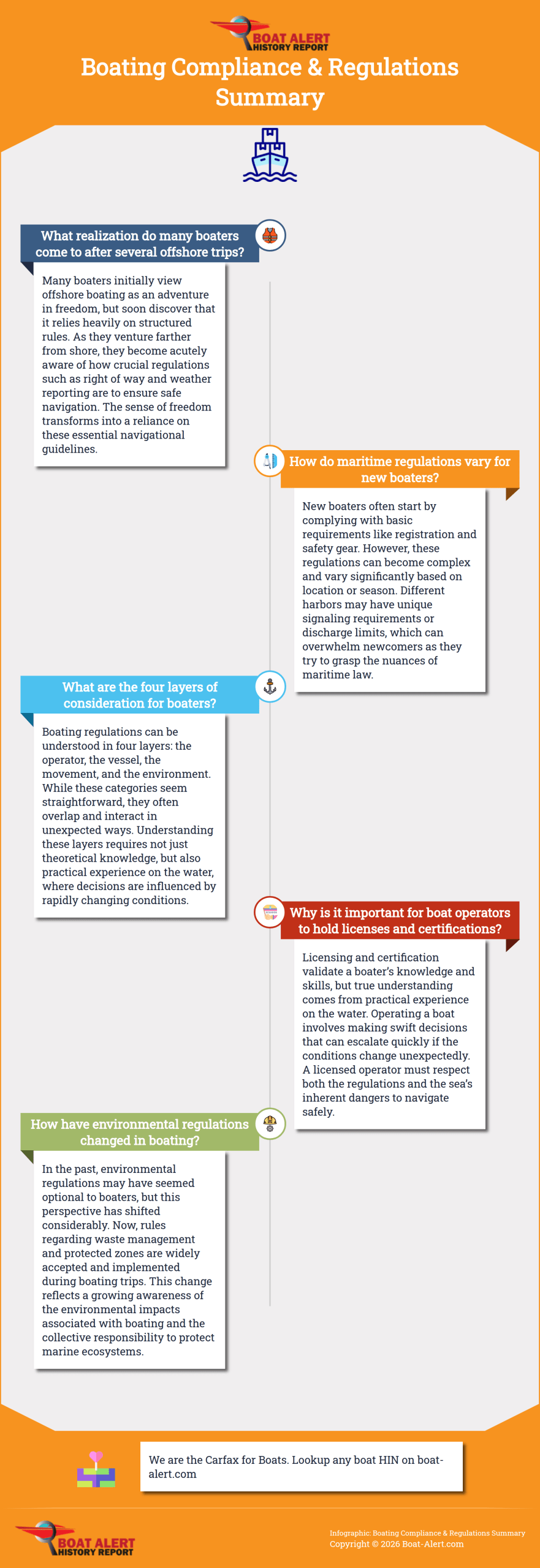
There’s a funny thing about boating that most people only realize after a few trips offshore: you go out there thinking it’s all about freedom, but the further you get from shore, the more you start depending on rules. Not in an abstract way—very practically. Channels, signals, right-of-way, weather reporting… suddenly the “freedom” feels more like something carefully held together by invisible threads.
I remember the first time I crossed into a different maritime jurisdiction. Everything looked the same—same water, same wind—but the rules changed almost quietly, like someone had rewritten the language of the sea overnight. That feeling never really goes away, no matter how experienced you get.
When Learning the Rules Becomes Part of Learning the Sea
For new boaters, compliance usually starts small and almost boring: registration papers, safety gear, a checklist someone hands you before departure. You nod, tick boxes, think you’ve got it.
But it doesn’t stay simple for long.
Requirements shift depending on where you are—coastal waters, inland lakes, foreign ports—and sometimes even the time of year. One harbor asks for a specific signaling setup, another suddenly cares about waste discharge limits you’ve never heard of before.
And then there are the students. Anyone who’s been through a maritime academy knows this strange overload phase: simulator sessions in the morning, navigation theory after lunch, safety regulations at night, and somewhere in between, essays that feel like they never end. Many students reach a point where they simply cannot keep up with the academic workload and look for external help such as pay someone to do research paper work in order to get through the pressure while still staying focused on their practical seamanship skills. It’s not really about avoiding work—it’s about dealing with overload in a system that demands both theoretical knowledge and constant hands-on training.
The Four Layers That Actually Matter at Sea
If you strip away the legal language, boating regulations tend to fall into four rough layers. It’s not official terminology, just something you start noticing after a while: the operator, the vessel, the movement, and the environment.
That sounds neat written down, but in practice these things overlap constantly.
Operator Side: You, the Decision Maker
Licensing and certification are the obvious entry point. You take a course, pass an exam, maybe do a practical assessment. Easy enough on paper.
But real understanding only starts when you’re out there and realize how quickly conditions change. A decision that feels minor on land—delaying a turn, misreading a current—can escalate fast. Compliance here isn’t just about having a certificate; it’s about whether you actually behave like someone who respects what the water can do.
The Vessel: What You Forget to Check Until It Matters
Every boat has its own small list of things that can go wrong: lights that fail, pumps that clog, equipment that was “definitely checked last season.” Regulations exist to reduce those surprises, even if people sometimes treat them as paperwork.
Life jackets, fire extinguishers, navigation lights—none of it feels important until it suddenly is. The strange part is how often experienced boaters still get caught by something simple, like an expired flare kit sitting unnoticed in a storage compartment.
Navigation Rules: Quiet, Invisible, and Absolutely Non-Negotiable
Right-of-way rules are a bit like grammar. You don’t think about them when they’re working, but everything breaks down quickly when they’re ignored.
There’s always a temptation to rely on “how things are usually done here.” Local habits, shortcuts, informal understanding between regulars on a waterway. And most of the time, it works—until it doesn’t. The sea doesn’t really care about habits.
Alcohol and Judgment Calls You Think You Can Still Make
This one is simple but underestimated. Boating under the influence laws exist for a reason, and anyone who has tried handling a vessel in shifting wind knows why.
Even sober, your brain is juggling motion, distance, sound, and constantly changing conditions. Add impairment to that, and the margin for error basically disappears. There’s not much philosophy needed here—just experience.
Environmental Rules: The Side of Boating That Used to Be Ignored
Not long ago, many of these rules felt optional to people. Fuel discharge, waste handling, protected zones—things that were easy to overlook if you weren’t directly affected.
That’s changed. Slowly, sometimes awkwardly, but it has changed.
Now even recreational boaters talk about no-discharge zones and invasive species controls like they’re normal parts of planning a trip. Not because it’s trendy, but because people have seen what happens when it’s ignored.
Paperwork: The Part Everyone Forgets Until It’s Too Late
There’s a specific kind of mistake that doesn’t come from ignorance, but from assumption—you think the document is valid, or stored somewhere, or “renewed already.”
It sounds small until an inspection happens or a port authority asks for something you don’t have in front of you.
Most compliance failures are surprisingly ordinary like that.
Crossing Borders: Same Water, Different Logic
International waters or even regional transitions can feel deceptively smooth. The ocean doesn’t show you a line when you cross it.
But administrations do. Customs declarations, cruising permits, entry reporting—all the things that suddenly matter more than your navigation plan for the day.
Experienced captains usually learn this the hard way at least once.
Commercial Operations: Where Compliance Stops Being Optional
For commercial vessels, everything scales up: inspections, documentation logs, crew certification, maintenance tracking.
It’s less flexible, but also more structured. And in a way, more predictable. There’s comfort in that too.
Technology Helps… Until It Doesn’t
Modern systems have made navigation easier in ways that are hard to ignore. AIS, digital charts, autopilot systems—they reduce workload significantly.
But they also introduce a quiet risk: overtrust. The sea doesn’t always align with what your screen is showing.
Enforcement: Not Always What People Expect
A lot of people imagine enforcement as strict and immediate punishment. In reality, it often starts with correction, explanation, even patience.
Many issues are handled as teaching moments rather than penalties, especially when intent isn’t reckless.
The Cost You Don’t See Until It Arrives
Non-compliance rarely feels urgent in the moment. That’s the problem.
Fines, insurance complications, liability after incidents—these show up later, often when they’re least convenient.
Closing Thought: Rules as Part of Seamanship
The longer you spend around boats, the more you realize compliance isn’t something separate from seamanship. It’s part of it.
Not the most exciting part, not the part people talk about in stories—but the part that quietly keeps everything from going wrong at the wrong time.
#BoatingRule #rules #freedom #Boating #Seamanship
Categories: To learn more about Boat-Alert.com History Reports for used boats and boat hull id visit: www.Boat-Alert.com