STCW courses as a strategic asset for safer boat ownership
Owning a boat isn’t just about horsepower, sleek hulls, or weekends on the water. The moment a vessel leaves the dock, safety, training, and regulatory compliance become just as important as performance.
Many boat owners don’t realize that crew training can influence insurance premiums, charter eligibility, and even resale value. In today’s marine market, documented safety credentials are increasingly expected, especially for larger yachts, offshore cruising vessels, and boats involved in charter operations.
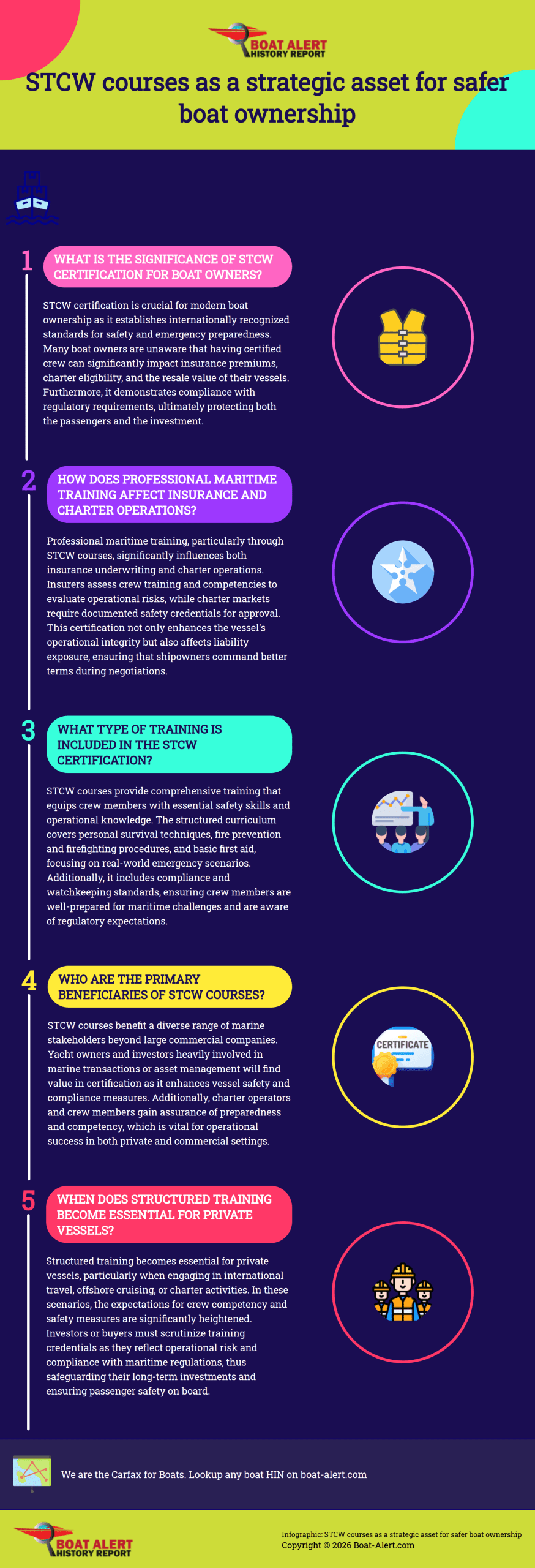
One qualification appears again and again in maritime compliance discussions: STCW Convention. These internationally recognized training standards help ensure that crew members know how to respond to emergencies, manage onboard risks, and operate within global maritime regulations.
In this guide, we’ll explain:
- Why STCW certification matters for modern boat ownership
- What professional maritime training actually includes
- How certification affects insurance, charter operations, and resale value
- When training becomes essential for private vessels
Whether you’re buying a yacht, hiring crew, or preparing for offshore cruising, understanding maritime certification can help protect both your passengers and your investment.
Buying or operating a boat involves more than paperwork and maintenance. This article explains why maritime certification matters, what professional training includes, who benefits from it, how it affects insurance and resale value, and when it becomes essential. You will also learn how structured training supports compliance, protects investment, and builds confidence for owners and buyers alike.
Serious boat owners think beyond horsepower and hull design. They consider safety systems, crew competence, and regulatory exposure. Maritime standards influence charter approval, insurance underwriting, and even vessel registration. Training is not limited to commercial ships. It plays a growing role in private yacht operations and high value vessel management.
Professional certification often begins with STCW courses, which establish internationally recognized safety and watchkeeping standards. These programs set a clear framework for onboard emergency response, fire prevention, and crew coordination. The phrase STCW courses appears frequently in maritime compliance discussions because insurers, flag states, and charter operators rely on it as a baseline qualification.
Why STCW courses matter for modern boat ownership
International travel, offshore cruising, and yacht charter activity have raised expectations for crew training. Insurers review risk profiles carefully. Certified crew members signal reduced operational risk and structured emergency preparedness.
Before purchasing a vessel, buyers should review ownership history and documentation using tools like the Boat-Alert HIN lookup system.
Charter markets demand documented competency. Vessel owners seeking to generate income through charter operations often find that certification is part of the approval process. Safety records and training documentation influence underwriting decisions and liability exposure.
Investors purchasing high value yachts also evaluate crew credentials during due diligence. Certification demonstrates that the vessel operates under disciplined safety protocols. That reassurance can strengthen negotiations and long-term asset value.
What STCW courses include in professional maritime training
Formal training under the STCW courses framework covers essential safety skills and operational knowledge. The curriculum is structured to prepare crew members for real maritime emergencies rather than theoretical scenarios.
Core safety and survival skills
Training typically includes:
- Personal survival techniques such as life raft deployment and water survival
- Fire prevention and firefighting procedures
- Basic first aid and medical response onboard
- Personal safety and social responsibility
These components form the foundation of maritime hazard response. Participants learn how to react under pressure and coordinate with other crew members during emergencies.
Compliance and watchkeeping standards
Watchkeeping responsibilities are another critical element. Crew members are trained to monitor vessel systems, maintain navigational awareness, and follow international maritime regulations. Clear role definition reduces confusion during critical situations.
Compliance training also addresses documentation and reporting. Vessel operators who understand regulatory expectations are less likely to face inspection delays or penalties. That knowledge becomes especially relevant when operating across international waters.
Who benefits from STCW courses
Certification supports a wide range of marine stakeholders. It is not limited to large commercial shipping operations. Boat Alert readers involved in yacht transactions or marine investment should understand who relies on these qualifications.
The following groups commonly benefit:
- Yacht crew members seeking professional advancement
- Captains operating charter vessels
- Offshore support personnel
- Owners hiring full time or seasonal crew
- Investors purchasing vessels for commercial use
Each of these stakeholders gains operational clarity and improved safety awareness. Owners who employ certified crew reduce uncertainty and demonstrate responsible oversight.
How STCW courses impact boat insurance and registration
Marine insurers assess operational risk using several factors. Crew training is one of them. A vessel staffed with certified professionals presents a lower perceived risk than one without documented qualifications.
The impact can be summarized clearly:
| Factor | Certified crew | Noncertified crew |
| Insurance assessment | Lower risk profile | Higher risk exposure |
| Charter approval | Stronger eligibility | Potential limitations |
| Regulatory inspections | Smoother compliance | Increased scrutiny |
| Buyer confidence | Greater trust | Additional due diligence |
Registration authorities may also require documentation when vessels operate commercially or under specific flag states. Training reduces delays during registration reviews and inspections.
Can STCW courses improve resale value and buyer confidence
Resale value often depends on documentation and transparency. Buyers look for clear maintenance records, proper registration, and qualified crew history. Certification strengthens the overall operational profile of a vessel.
Due diligence processes frequently include a review of crew credentials. Demonstrating compliance with recognized maritime standards builds confidence. Prospective buyers perceive reduced operational uncertainty.
Clear training documentation can also shorten negotiation cycles. When a buyer sees structured safety systems in place, discussions focus more on performance and condition rather than risk mitigation.
Is formal maritime training required for private vessels
Private recreational vessels do not always require certification. Requirements depend on vessel size, flag state regulations, and operational scope. Charter operations or international voyages may trigger mandatory training thresholds.
Even when not legally required, certification is often recommended for larger yachts and offshore passages. It prepares crew members to handle emergencies in remote environments. Insurance carriers may also favor vessels with documented safety training.
Owners planning extended cruising or commercial activity should review regulatory guidelines carefully. Early preparation avoids complications during inspections or policy reviews.
Choosing structured maritime training with FMTC
Training quality matters as much as certification itself. Recognized providers follow international guidelines and maintain updated course content. FMTC offers structured maritime programs aligned with global standards. Their approach supports both compliance and practical skill development.
A reliable training partner ensures documentation accuracy and professional instruction. That consistency protects vessel operators and supports long term operational stability.
Conclusion
Maritime safety influences insurance, registration, charter approval, and resale value. Certification under the STCW courses framework provides a structured path toward responsible vessel operation. Owners and investors who understand this connection strengthen both safety culture and asset protection.
Taking action early protects crew members and builds buyer trust. Review your vessel’s operational needs, consult regulatory guidance, and consider professional training as part of your risk management strategy.
Explore recognized training options through FMTC and ensure your vessel operates with documented competence and confidence.
FAQ
What are STCW courses?
STCW courses are internationally recognized maritime training programs that establish minimum safety and watchkeeping standards for seafarers.
How long do STCW courses take?
Basic safety training programs typically take several days to complete, depending on course structure and delivery format.
Is online maritime training available?
Some components may be available online, though practical modules often require in person instruction to meet certification standards.
Read Related Articles:
- Best Marine Surveyors in Chicago
- Best Marine Surveyors in Boston
- Vessel Documentation Search by Boat Hull Number
- How to Register a Boat in British Columbia | Vessel Licensing and Registration in British Columbia
- Best Strategy to Buy / Sell Boats
Categories: To learn more about Boat-Alert.com History Reports for used boats and hull check on a used boat visit: www.Boat-Alert.com